
Online focus groups vs surveys is a practical question if you want to earn extra money from research studies without wasting hours on the wrong option. Focus groups usually pay more per session and often more per hour. Surveys are easier to do whenever you have a few free minutes, but the pay is usually much lower. The best choice depends on your schedule, patience for screeners, and whether you prefer a live discussion or quick written answers.
The short version: online focus groups tend to pay better when you qualify, while surveys are better for flexible, small-dollar earnings. Neither should be treated like a full-time income source. Applying does not guarantee you will be selected, and incentives are normally paid only after you qualify, attend, and complete the study.
Online focus groups vs surveys: the basic difference
An online focus group is a moderated research session held by video call, phone, chat board, diary app, or another remote format. A moderator may ask you to react to a product idea, discuss shopping habits, review advertising, or explain how you make decisions. Some sessions involve a small group of participants. Others are one-on-one interviews.
These sessions usually take more commitment than surveys. You may need to complete a screener, confirm your identity, join at a specific time, keep your camera on, and participate for 60 to 120 minutes. Because researchers are paying for detailed feedback, online focus groups often offer higher incentives than routine surveys.
Surveys are simpler. You answer a questionnaire on your own schedule, usually on a phone or laptop. Some take only a few minutes. Others are longer product, brand, or lifestyle questionnaires. Surveys are easy to fit into the day, but individual payouts are often small. Many survey sites also use points, payout thresholds, or gift-card balances instead of immediate cash.
Which pays better?
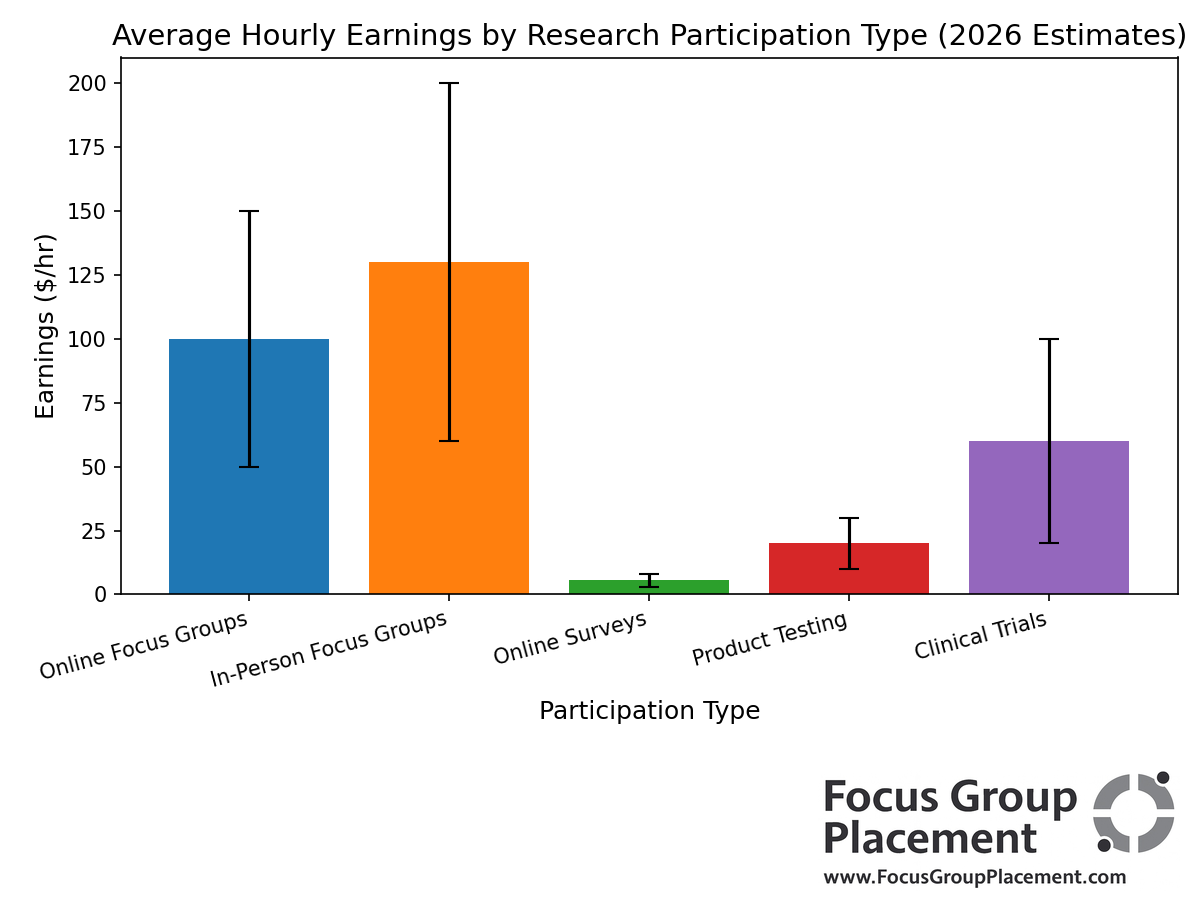
For most people, online focus groups pay better than surveys on a per-session basis. A legitimate online focus group might pay $50 to $200 for a one- or two-hour session. Specialized studies can pay more, especially when researchers need participants with a specific job, medical experience, purchase history, or professional background.
Surveys are usually much lower. A short survey may pay less than a dollar. A longer one may pay a few dollars. Higher-paying surveys exist, but they often have tighter screening rules or limited availability. The tradeoff is frequency: you may find surveys more often than focus groups, even if each one pays less.
That is why the honest answer is slightly frustrating. Focus groups usually pay better, but you will not qualify for every group you apply to. Surveys pay less, but they are more available and more flexible. If you only compare the payout after acceptance, focus groups win. If you compare guaranteed daily availability, surveys look steadier.
Why focus groups pay more
Researchers use focus groups when they need more than a checked box. They want to hear how people explain a choice, what language they use, what confused them, and what they noticed first. A moderator can ask follow-up questions in real time, which makes the feedback more useful than a simple rating scale.
That extra detail is why online focus groups and other online studies can command higher incentives. The researcher is buying your time, attention, and thoughtful participation. You may also be asked to test a concept, keep a short diary, review a mock website, or discuss a product category before it reaches the public.
Surveys still matter. Companies use them because they can collect responses from many people quickly. A survey is better for measuring broad patterns. A focus group is better for understanding why people think or behave a certain way. Both formats have a place in market research, but they do not pay participants the same way.
Qualification matters more than the headline payout
The biggest catch with online focus groups is screening. A study might sound perfect and still reject you because the client needs a very specific profile. Maybe they need parents of toddlers, people who recently changed banks, small business owners, electric vehicle shoppers, or people who use a certain app. If you do not match, you will not be invited.
Surveys also screen people out, sometimes after you have already answered several questions. That can be annoying. Still, survey platforms usually have more frequent questionnaires, so there may be another opportunity available right away.
This is where beginners often get discouraged. A $150 online focus group looks better than a $3 survey, but you may apply to several focus groups before landing one. Good research participation is partly a numbers game. Keep your profile accurate, apply only to studies that fit you, and do not exaggerate answers to pass a screener. Researchers look for consistency, and false answers can get you removed from future opportunities.
Time and flexibility
Surveys are the more flexible option. You can do them during a lunch break, while waiting for an appointment, or at night when you have a few minutes. You do not need to speak on camera, join a scheduled session, or block off a full hour.
Online focus groups require more planning. You may need a quiet room, a stable internet connection, and a working camera or microphone. If you miss a scheduled session without notice, the recruiter may be less likely to select you again. That makes focus groups a better fit for people who can protect a time slot and show up prepared.
Remote research has made the process easier, though. You no longer need to live near a major research facility to qualify for many paid studies. FocusGroupPlacement lists remote options along with broader paid research studies, so you can compare online, local, and category-specific opportunities in one place.
What participation feels like

Online focus groups are more social. You may talk with a moderator and other participants, explain your opinions out loud, and respond to follow-up questions. Some people enjoy that. Others find it tiring, especially if they would rather give written answers privately.
Surveys are quieter and more anonymous. You read, click, type, and move on. The work can feel repetitive, but it is low pressure. If you are camera shy or have an unpredictable home environment, surveys may be easier to fit into your life.
If you are comparing online focus groups vs surveys for the first time, think about energy as well as pay. A one-hour video discussion may be worth the higher incentive, but it still requires attention. A few quick surveys may pay less, but they may feel easier after a long day.
How to use both without wasting time
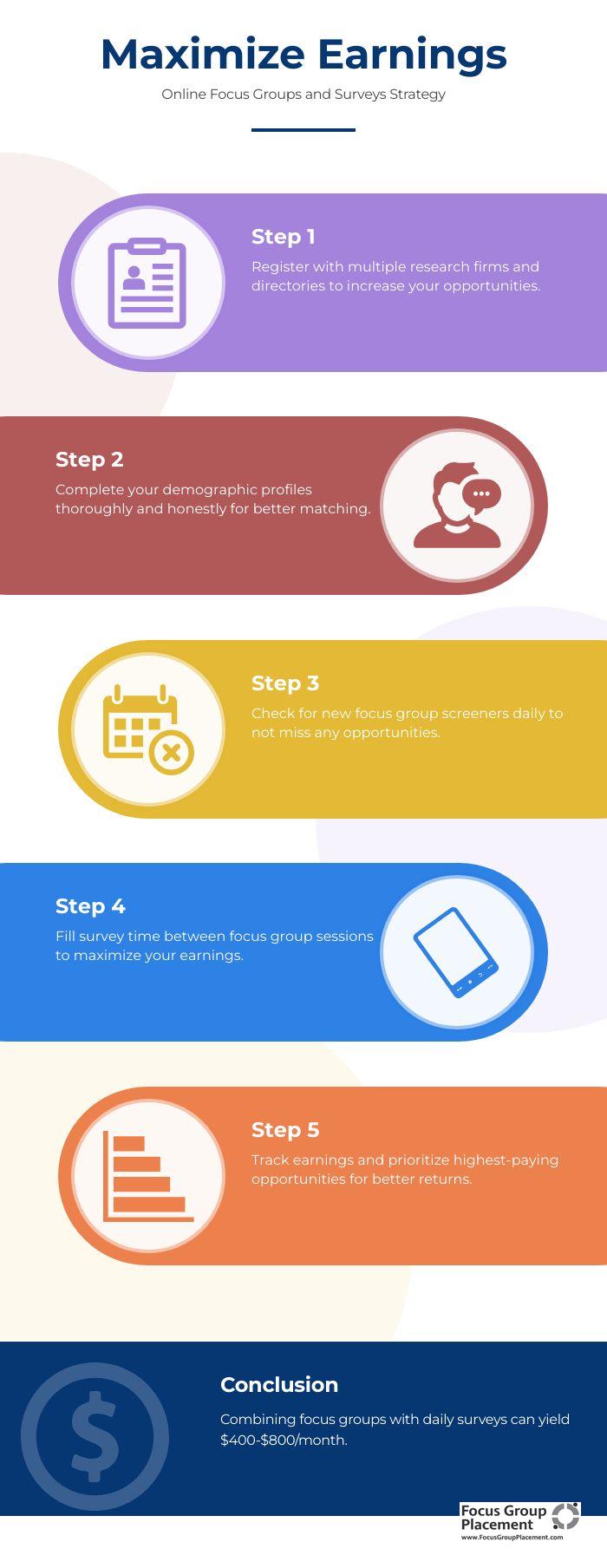
The strongest approach for many people is not choosing one forever. Use surveys for flexible, lower-pay activity, and apply for online focus groups when you see a study that fits your profile. That gives you a steadier stream of small opportunities while leaving room for higher-paying sessions.
- Keep your participant profiles complete and honest.
- Apply quickly when a relevant focus group opens. Spots can fill fast.
- Track which sites pay reliably and which ones waste your time.
- Read the incentive terms before you commit to a session.
- Do not pay an upfront fee to access a focus group. Legitimate research studies pay participants, not the other way around.
If you want to compare remote studies with traditional facility-based sessions, browse current in-person focus groups as well. Local studies can sometimes pay well because they require travel or a narrower geographic pool.
So, which should you choose?
Choose online focus groups if you want higher payouts, can handle scheduled sessions, and are comfortable giving detailed feedback. Choose surveys if you want maximum flexibility and do not mind smaller rewards. Use both if you want the best chance of finding paid research opportunities consistently.
For a survey-specific option, LevelSurveys is one place to compare routine survey opportunities. For focus groups, interviews, product tests, clinical trials, and other research formats, FocusGroupPlacement can help you browse current listings by category.
Browse online studies
Want to see what is available now? Browse current online studies and compare remote focus groups, interviews, and other paid research opportunities. Review the eligibility details before applying, and remember that payment depends on being selected and completing the study.