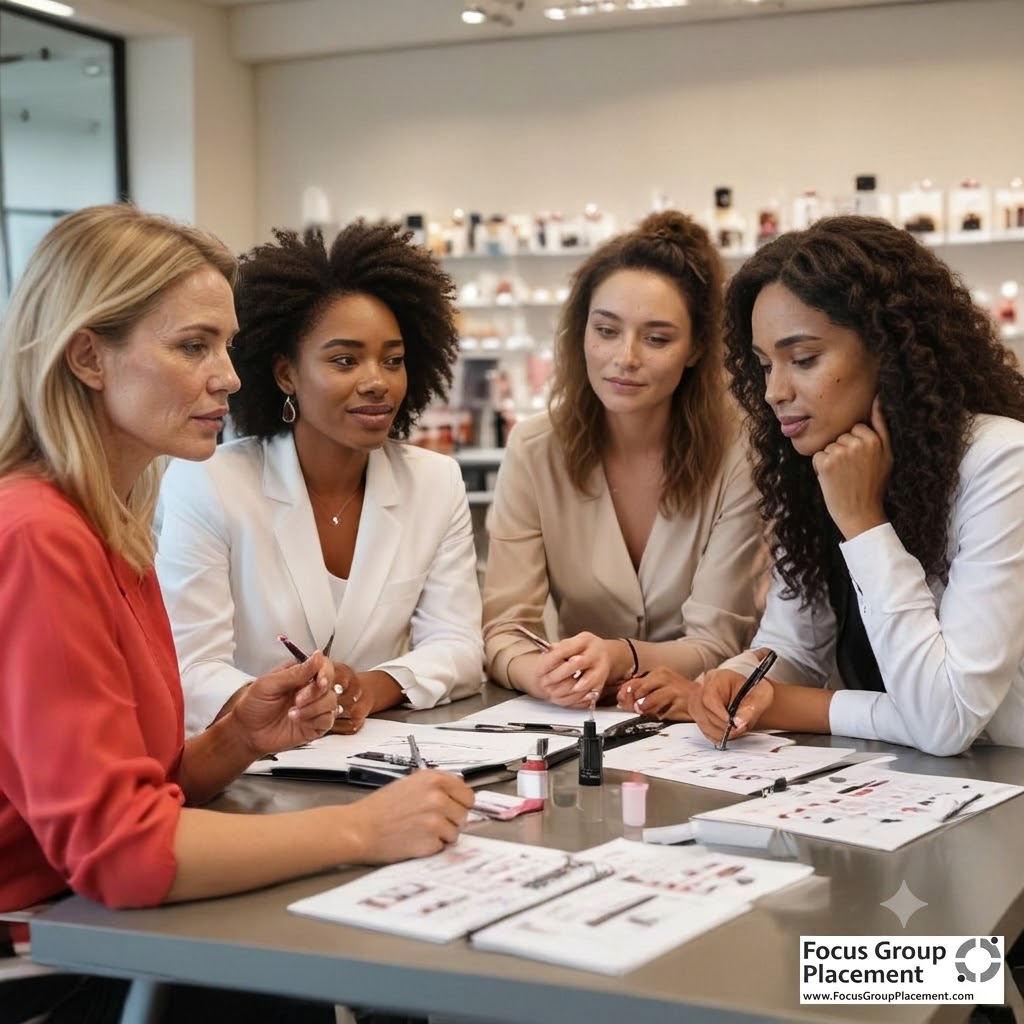
If you’ve ever wished someone would pay you to try new lipsticks, test a moisturizer before it hits store shelves, or weigh in on a fragrance concept, you’re in luck — because that’s exactly what beauty focus groups offer. These research sessions are commissioned by some of the world’s most recognizable cosmetics and skincare brands, and they pay real money for the honest opinions of everyday consumers. Whether you’re a skincare enthusiast, a makeup lover, or simply someone who uses personal care products daily, there’s likely a cosmetic focus group looking for someone exactly like you. This guide breaks down everything you need to know about beauty focus groups in 2026: what they are, what they pay, how to find them, and how to maximize your chances of qualifying.
What Are Beauty Focus Groups and Why Do Brands Use Them?
Beauty focus groups are structured qualitative research sessions where a small group of consumers — typically 6 to 10 people — gather to evaluate cosmetics, skincare products, haircare formulations, or related concepts under the guidance of a trained moderator. The goal is to give brands nuanced, in-depth feedback that surveys and sales data simply can’t provide. When a major skincare brand is deciding between two packaging designs, debating how to position a new serum, or trying to understand why consumers aren’t connecting with a product, they turn to focus groups to get answers directly from the people who will actually buy (or not buy) their products.
The beauty industry is uniquely reliant on focus group research because the purchasing decision is so deeply personal and emotional. Unlike buying a vacuum cleaner or a software subscription, choosing a foundation shade or a face cream involves sensory experience, identity, aspiration, and trust. Brands need to know how a moisturizer smells when it comes out of the jar, whether a mascara wand feels intuitive to use, and whether a new product concept aligns with what their target customer actually wants in her life. No amount of internal testing replaces the lived experience of a real consumer in the target demographic.
Large conglomerates like L’Oréal, Procter & Gamble, Unilever, Estée Lauder, and Shiseido all invest heavily in consumer research and commission studies through market research firms on a continuous basis. Emerging indie brands preparing for retail launches at Sephora or Ulta also conduct focus group research to validate their products before committing to major production runs. This means there’s a steady, ongoing pipeline of cosmetic focus groups looking for participants across a wide range of demographics and product categories.
Types of Beauty Focus Group Opportunities
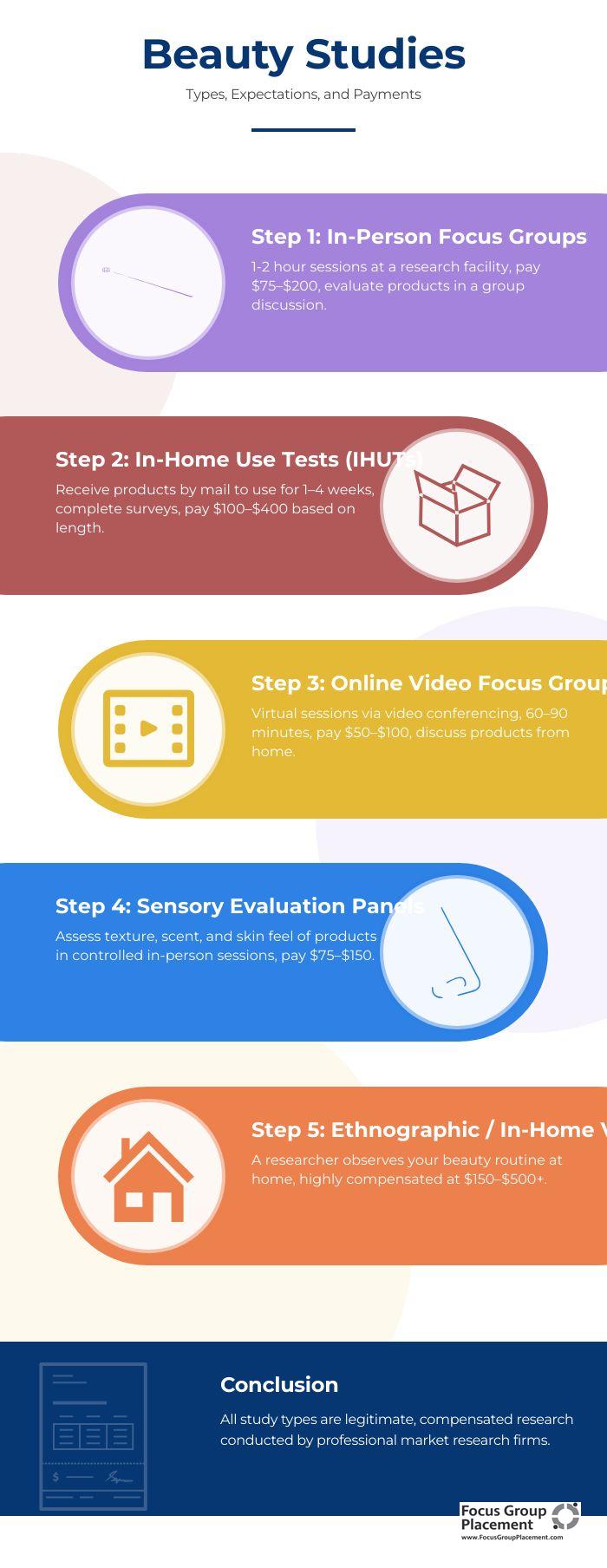
Not all beauty focus groups look the same, and understanding the different formats will help you identify which opportunities are the best fit for your lifestyle and interests. The most traditional format is the in-person focus group, held at a market research facility, where you’ll sit with a small group of other consumers and discuss products or concepts guided by a professional moderator. These sessions typically last one to two hours and pay between $75 and $200, with the incentive paid at the end of the session — usually in cash, check, or a digital payment.
In-home use tests, sometimes called IHUTs, represent one of the most exciting categories of skincare product testing. In these studies, brands mail you products directly — moisturizers, serums, shampoos, makeup — and ask you to incorporate them into your routine for a set period, often one to four weeks. You’ll typically complete a baseline survey, periodic diary entries, and a final assessment. Because these studies require more of your time and attention over an extended period, they tend to pay more, with compensation ranging from $100 to $400 or even higher for multi-week studies. The added bonus, of course, is that you get to try products that haven’t been released to the public yet.
Online video focus groups have grown dramatically since 2020 and remain a popular format in 2026. These sessions function much like in-person groups but take place over video conferencing platforms, meaning you can participate from your own home. They’re particularly common for concept testing — where brands want feedback on marketing materials, brand names, or product ideas rather than physical products — and they pay $50 to $100 for a 60 to 90-minute session. Ethnographic research is the most intimate format: a researcher visits your home to observe your actual beauty routine in its natural environment, watching how you apply your skincare, organize your vanity, and make product choices. These studies are relatively rare but are among the highest-paying, often offering $150 to $500 or more.
How Much Do Beauty Focus Groups Pay?
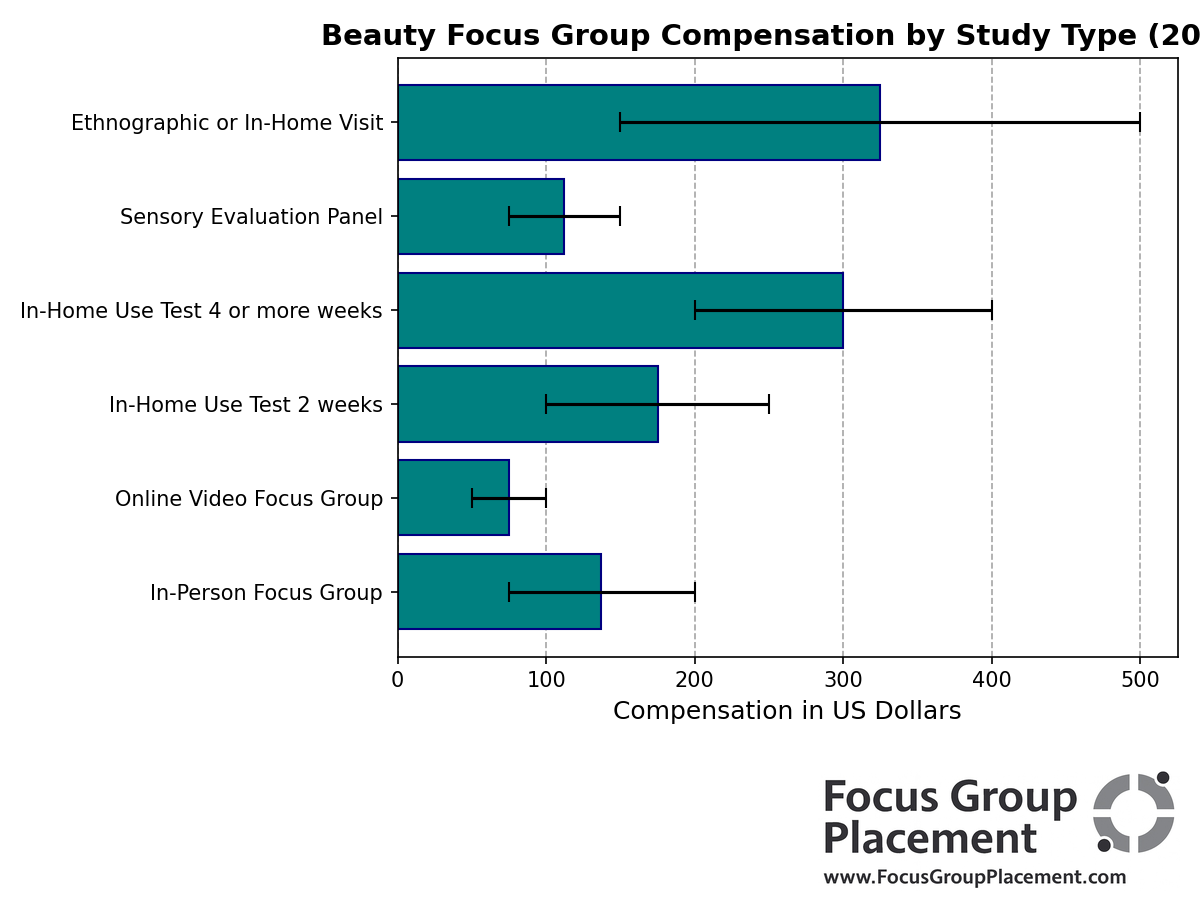
One of the most appealing aspects of participating in beauty focus groups is the compensation, which is generally higher than what you’d earn from standard online surveys. The beauty and personal care industry is extraordinarily profitable — global cosmetics revenue exceeded $600 billion in 2025 — and brands allocate meaningful research budgets to understand their consumers. That budget flows directly to participants in the form of incentive payments.
For in-person focus groups, the standard range in 2026 is $75 to $200 per session, with most studies clustering around $100 to $150. Sessions at market research facilities in major metropolitan areas like New York, Los Angeles, and Chicago tend to pay at the higher end of this range because the cost of recruiting in dense urban markets is greater. Online focus groups pay somewhat less — typically $50 to $100 — but require no travel and can be completed in your pajamas. If you qualify for an ethnographic study, you’re looking at genuinely substantial compensation: brands that commission in-home observational research understand they’re asking a lot of a participant’s time and privacy, and they pay accordingly.
Payments are typically made immediately after an in-person session in cash or check, or within a few days for online studies via PayPal, Venmo, Zelle, or a gift card of your choice. It’s worth noting that focus group incentives are considered taxable income in the United States, so if you participate regularly and earn meaningful amounts, keep records and plan accordingly at tax time.
Who Qualifies for Beauty Focus Groups?
One of the most common questions people have about cosmetic focus groups is whether they’ll actually be able to qualify for studies. The honest answer is that beauty research is one of the more accessible categories of consumer research because the qualifying criteria are based on product usage and demographic characteristics that millions of people share. You don’t need any special expertise or professional background — you just need to be a real consumer who uses beauty or personal care products.
That said, every study has a specific target profile, and you’ll be screened against it before being invited. Common screening criteria for beauty focus groups include your age range, gender identity, skin type (oily, dry, combination, sensitive), skin tone or complexion, specific skin concerns (acne, hyperpigmentation, fine lines, redness), haircare habits, and current product usage. If a brand is testing a new anti-aging serum, they might recruit women aged 40 to 65 who are actively concerned about fine lines and currently use a moisturizer with SPF. If a brand is testing a new foundation for deeper skin tones, they’ll recruit participants whose complexion falls within a specific range on a shade scale.
The key to qualifying more often is to be honest on screeners — misrepresenting yourself to get into a study is counterproductive, since the research won’t capture your authentic experience, and you may be flagged and removed from future opportunities. Register with multiple research panels and keep your profile information detailed and current. Brands and research firms are actively looking for participants; the more panels you’re registered with, the more opportunities you’ll encounter that match your profile. You can explore focus group opportunities, including beauty and cosmetics studies, through Focus Group Placement, which maintains a regularly updated directory of research participation opportunities across the country.
How to Find and Apply for Beauty Focus Groups
Finding legitimate beauty focus groups requires knowing where to look and being proactive about registering. The most reliable approach is to register with dedicated market research panels and focus group recruitment databases, which work as intermediaries between research firms and participants. When a cosmetics brand commissions a study, the research firm draws from these databases to find qualified participants, which is why being registered and maintaining an up-to-date profile is so important.
Start by visiting Focus Group Placement, which aggregates focus group opportunities including beauty and cosmetics studies from across the country. You can also browse by city to find opportunities near you, or explore the market research firms directory to identify firms in your area that specialize in consumer goods and beauty research. Registering directly with local and national market research companies is another effective strategy — many have their own participant databases and reach out directly when a relevant study becomes available.
When you apply for a study, you’ll typically complete a screener questionnaire that takes 5 to 15 minutes. Be thorough and accurate in your answers. If you don’t qualify for a particular study, don’t be discouraged — your profile remains on file and you may be contacted for future studies that are a better fit. Some research firms also ask you to complete a brief background check or sign a non-disclosure agreement before participating, particularly for studies involving unreleased products. This is standard practice and a sign of a legitimate operation, not a red flag. To learn more about the full process of joining focus groups, check out our guide on how to join focus groups.
It’s also worth exploring product testing opportunities more broadly, which sometimes overlap with beauty research. Legitimate product testing opportunities exist across many consumer categories, and building experience as a product tester can make you a more attractive candidate for paid cosmetic focus groups over time.
Skincare Product Testing: A Closer Look
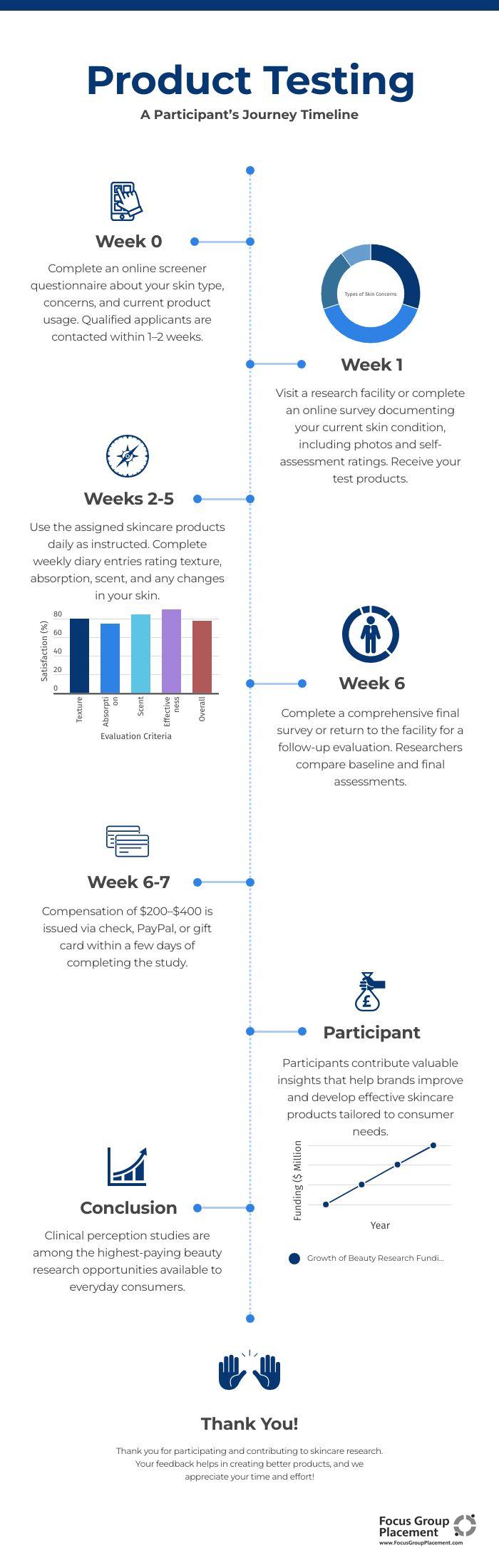
Skincare product testing deserves its own discussion because it has become one of the fastest-growing segments of consumer research participation. The global skincare market surpassed $200 billion in 2025, driven by consumer demand for science-backed formulations, clean ingredients, and personalized solutions. Brands are investing heavily in understanding exactly what consumers experience when they use a product — not just whether they like it, but the specifics of how it feels, what concerns it addresses, how it fits into their routine, and whether it delivers on its promises over time. According to the Cosmetics & Toiletries industry publication, consumer perception testing has become a cornerstone of modern product development, with brands relying on real-world participant feedback to validate claims before products reach retail shelves.
Clinical perception studies are a particularly interesting subset of skincare product testing. In these studies, participants use a product over a set period — often four to eight weeks — and complete assessments at multiple checkpoints. Researchers measure perceived improvements in specific skin concerns, sometimes alongside objective measurements taken by dermatology-adjacent professionals. These studies pay well, often $200 to $400 or more, and participants sometimes keep the products at the end of the study. If you have specific, well-defined skin concerns — persistent dryness, visible pores, hormonal acne, post-inflammatory hyperpigmentation — you may be a particularly desirable candidate for these studies.
Beyond skincare, haircare product testing is another growing category, with brands seeking participants who have specific hair textures, concerns, or chemical treatment histories. If you have color-treated hair, natural 4C hair, fine hair prone to breakage, or any other specific hair characteristic, you may find yourself qualifying for studies that many others don’t. The more specific and defined your personal care profile, the more valuable you are to certain research studies. Our article on becoming a product tester offers additional guidance on building a profile that attracts more testing opportunities.
Tips for Succeeding in Beauty Focus Groups
Succeeding in beauty focus groups means more than just showing up. Researchers value participants who are honest, observant, and able to explain their opinions clearly. Before the session, review your current skincare, haircare, makeup, and personal-care routines so you can accurately describe the products you use, how often you use them, and what influences your purchasing decisions. During the discussion, provide specific feedback rather than vague reactions. Explain what you like or dislike about a product’s texture, scent, packaging, ingredients, application, performance, and price. Avoid giving answers you think the moderator wants to hear, as authentic responses are far more useful to brands. Arrive on time, follow all product-testing instructions carefully, and participate without dominating the conversation. Building a reputation as a reliable and thoughtful participant can improve your chances of being invited to future beauty studies and higher-paying product tests.