

If you’ve ever wondered whether your opinion about an app, website, or gadget could be worth real money, the answer is yes—and technology focus groups are one of the most rewarding ways to get paid for it. In 2026, technology companies of all sizes—from scrappy startups developing the next killer app to Fortune 500 corporations refining enterprise software—are spending enormous sums to understand how real people interact with their products. That investment flows directly to everyday consumers who are willing to share their honest experiences and feedback during structured research studies. Whether you’re a casual smartphone user or a seasoned IT professional, there is likely a tech focus group opportunity designed specifically for someone with your background and perspective.
What Are Technology Focus Groups and Why Do Companies Use Them?
Technology focus groups are moderated research sessions in which a small group of participants—typically between six and twelve people—discuss, evaluate, or use a technology product or service while a trained researcher observes and records their reactions. Unlike traditional surveys that collect simple yes/no answers or numerical ratings, technology focus groups capture the nuance and depth of human experience. A researcher can ask follow-up questions, probe emotional reactions, and observe body language in ways that no questionnaire can replicate. This qualitative richness is exactly what companies need when they’re trying to understand not just whether users like a product, but why they like it, what frustrates them, and what would make them choose it over a competitor’s offering.
Companies use tech focus groups at virtually every stage of the product development lifecycle. Early in development, concept testing sessions help companies understand whether a product idea resonates with its target audience before significant resources are committed to building it. Later, beta testing sessions expose real users to functional (but not yet publicly released) versions of software or hardware to identify bugs, usability problems, and feature gaps. Post-launch, companies conduct ongoing UX research to continuously improve their products based on real-world usage patterns. All of this means there is a constant, year-round demand for research participants across the technology sector—and that demand translates into steady earning opportunities for consumers who know how to find and qualify for these studies. If you’re new to the world of paid research, our guide on how to join focus groups is an excellent place to start.
Types of Technology Focus Groups and Research Studies
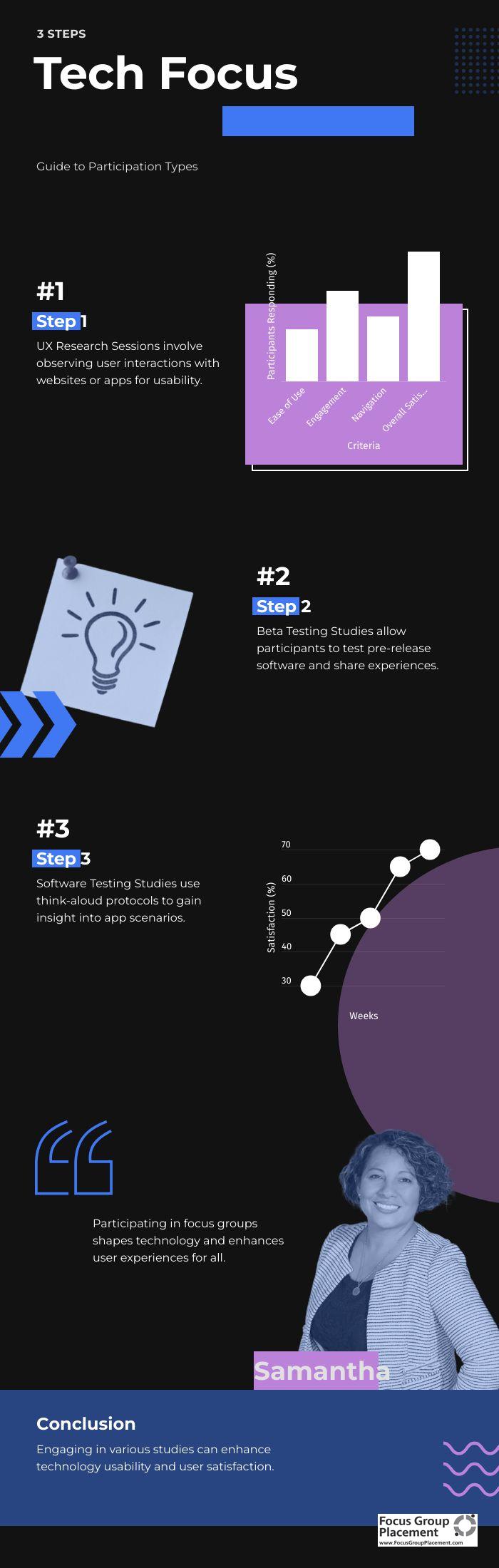
Not all technology research is the same, and understanding the different formats can help you identify which opportunities are the best fit for your skills, schedule, and interests. The most common type of tech focus group is the user experience (UX) research session, in which participants are asked to complete specific tasks using a website, application, or device while a researcher observes—either in person or via screen-sharing software. These sessions are designed to identify friction points in the user interface and are extraordinarily valuable to companies because they reveal usability problems that internal teams often overlook after staring at the same product for months. The Nielsen Norman Group, one of the world’s leading UX research authorities, has long documented how focus groups and usability studies together form the backbone of effective product development.
Beta testing studies represent another major category of technology research. In a beta testing study, participants are given early access to a software application, mobile app, or operating system before its public release. They use the product in their daily lives over a specified period—which could be a single afternoon or several weeks—and report on their experiences through structured surveys, diary entries, or follow-up interviews. Beta testing studies often pay quite well because they require a more significant time commitment and provide companies with detailed, longitudinal feedback that shapes final product decisions. Similarly, software testing studies involve participants working through specific scenarios within an application while describing their thought process aloud, a technique known as “think-aloud protocol” that helps researchers pinpoint exactly where users become confused or frustrated.
Hardware evaluation studies are a particularly exciting category for technology enthusiasts. In these studies, participants receive physical devices—smartphones, laptops, smart home gadgets, wearables, gaming peripherals, or other consumer electronics—to evaluate over a set period. Companies want to understand how people actually use these devices in their homes and daily routines, which provides far richer data than controlled lab testing. If you enjoy evaluating physical products, you may also want to explore legitimate product testing opportunities that complement technology research participation. Finally, online panel discussions bring groups of participants together via video conferencing to discuss technology topics, react to product concepts, or share opinions on technology trends. These sessions are typically shorter and less demanding than in-person studies but still offer meaningful compensation for an hour or two of your time.
How Much Do Technology Focus Groups Pay?
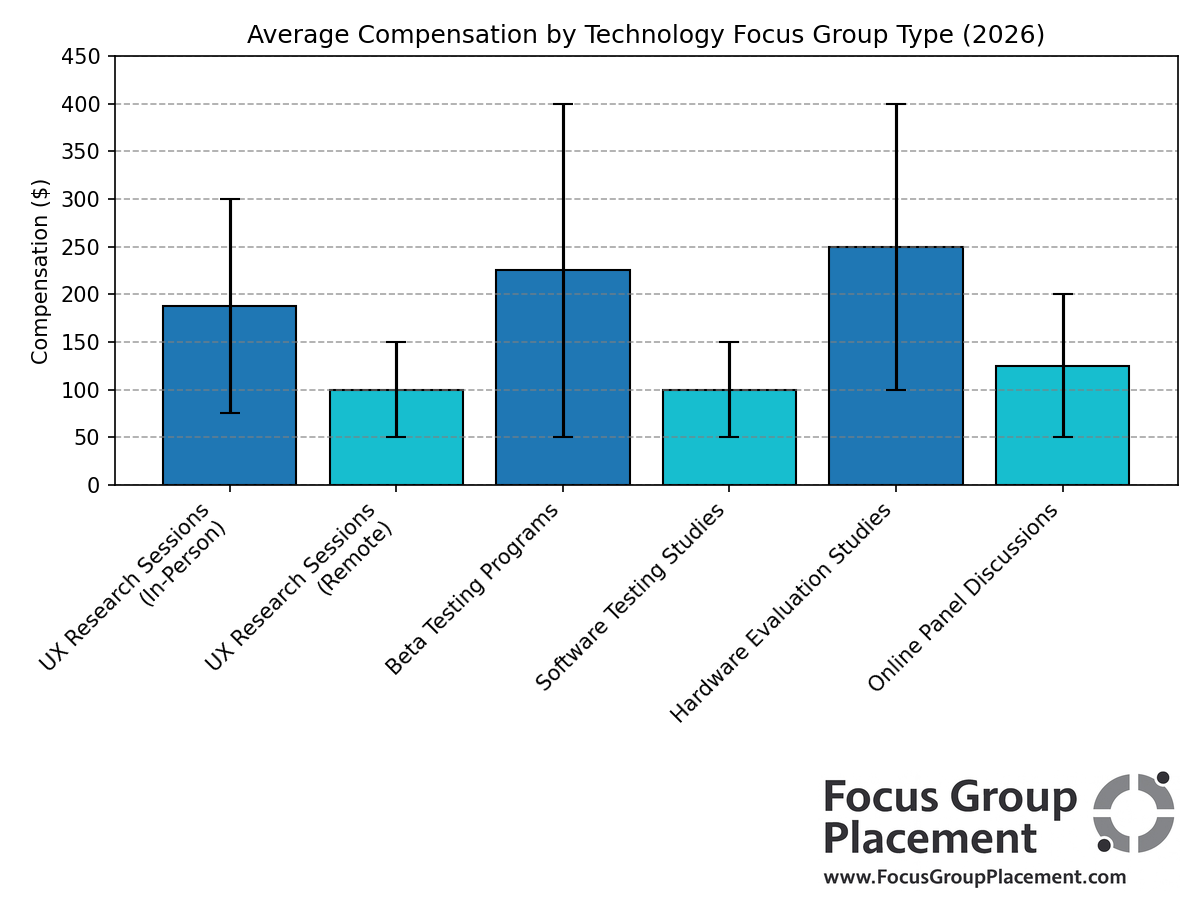
Compensation for technology focus groups tends to be among the highest in the market research industry, reflecting both the specialized knowledge that participants bring and the high value that technology companies place on quality feedback. In-person UX research sessions typically run between sixty and ninety minutes and pay anywhere from $75 to $300 depending on the company, the complexity of the research, and the specificity of the participant profile they need. If a company is specifically seeking, say, small business owners who use accounting software daily and have a household income above a certain threshold, the narrower that qualifying criteria is, the more they tend to pay to recruit those harder-to-find participants.
Remote technology focus groups, which have become increasingly common since 2020 and remain a dominant format in 2026, typically pay somewhat less than their in-person counterparts—usually between $50 and $150 per session—but offer the significant advantage of participating from the comfort of your own home without travel time or transportation costs. Beta testing programs and multi-week software testing studies often provide compensation through a combination of per-session payments and completion bonuses, and total earnings for a single study can range from $50 to $400. Hardware evaluation studies, particularly those involving premium consumer electronics, can pay even more when they involve an extended in-home testing period. For a broader look at how product evaluation studies are compensated, see our overview of remote product testing jobs that actually pay.
It’s worth noting that compensation is typically paid promptly after study completion, often within one to two weeks, through methods including PayPal, Venmo, prepaid Visa gift cards, or check. Some research firms also use points-based systems that can be redeemed for cash or gift cards. Always confirm the payment method and timeline before participating so you know exactly what to expect.
How to Find and Qualify for Technology Focus Groups
Finding legitimate technology focus group opportunities requires knowing where to look, since these studies are not advertised on mainstream job boards. One of the most efficient ways to discover opportunities is through a comprehensive market research directory like Focus Group Placement, which aggregates focus group and market research opportunities from firms across the country. You can browse by city to find in-person technology research studies near you, or explore national and remote opportunities if you prefer the flexibility of participating from home. Focus Group Placement lists not only focus groups but also product testing opportunities and other research study types, making it a one-stop resource for consumers interested in the market research space.
To qualify for technology-specific research, you’ll typically need to complete a screener survey that assesses your background, technology usage habits, and demographic profile. Be honest on screener surveys—research firms use attention-check questions and follow-up interviews to ensure participants match their stated qualifications, and misrepresenting yourself can result in removal from a study and disqualification from future opportunities. Technology companies often look for a specific mix of experience levels: some studies want power users who can provide expert-level feedback, while others specifically seek non-technical consumers to ensure their products are accessible to a general audience. The Quirk’s Media industry resource is a useful reference for understanding how professional market researchers approach participant recruitment and screening.
If you’re interested in exploring opportunities with multiple research firms, the market research firms directory on Focus Group Placement provides a useful starting point for identifying companies that specialize in technology research. Registering with several firms simultaneously is a common and accepted practice that maximizes your chances of being invited to studies that match your profile. If you’re in a major tech hub, also check for city-specific opportunities—for example, tech companies frequently conduct in-person research in cities like Chicago, where you can find a robust ecosystem of consumer research companies, or in other major metros across the country.
Beyond focus group directories, technology companies sometimes recruit participants directly through their own websites, beta testing programs, and user research panels. Microsoft, Google, Apple, and many other major technology companies maintain their own user research programs. Keeping an eye on the websites of technology companies whose products you use regularly can occasionally turn up direct participation opportunities, though these are less frequently advertised than studies run through third-party research firms. The in-person focus groups directory at Focus Group Placement is updated regularly and is worth bookmarking so you can check back as new technology studies become available.
Tips for Making the Most of Technology Focus Group Participation
Once you’ve been accepted into a technology focus group, the quality of your participation directly influences your chances of being invited back for future studies. Research firms maintain records of participant behavior and share feedback about participants with their networks. Participants who arrive prepared, engage thoughtfully, and communicate clearly tend to receive repeat invitations and are sometimes specifically requested for high-value studies. The most important thing you can bring to any tech focus group is genuine, honest feedback. Researchers are not looking for praise—they want to understand real pain points and authentic reactions, even when those reactions are critical of the product being studied.
It also helps to articulate your thought process as specifically as possible. Instead of saying “this app is confusing,” try to explain exactly what confused you: “I expected the settings menu to be accessible from the home screen, but I couldn’t find it until the third time I tried.” That level of specificity is enormously valuable to product teams and demonstrates that you are a thoughtful, high-quality participant. If the study involves a think-aloud protocol, practice narrating your actions and reactions as you work through tasks—this takes some getting used to but becomes natural quickly.
For those interested in expanding their market research participation beyond focus groups, remote product testing opportunities and legitimate product testing programs offer additional ways to earn money by evaluating products from home. You might also consider exploring brand testing jobs as another avenue for paid consumer research participation. Understanding the full landscape of market research opportunities helps you build a diversified portfolio of earning activities that can generate consistent supplemental income throughout the year.

Frequently Asked Questions About Technology Focus Groups
Do I need to be a technology expert to participate in tech focus groups? Absolutely not. In fact, many technology companies specifically seek non-technical participants to ensure their products are usable by a general audience. If you use a smartphone, stream content online, shop on e-commerce websites, or use any software in your daily life, you have a relevant perspective that technology companies want to hear. The key qualification is being an honest, engaged user of some form of technology—which describes virtually everyone in 2026.
How often can I participate in technology focus groups? Most research firms limit how frequently the same participant can join studies to ensure fresh perspectives and prevent “professional focus groupers” from skewing their data. You may be asked to wait three to six months between studies with the same firm. However, since you can register with multiple research firms simultaneously, distributing your participation across several companies allows for more frequent overall participation without violating any individual firm’s policies.
Are technology focus groups legitimate? Yes, when sourced through reputable directories and established research firms, technology focus groups are entirely legitimate. Legitimate studies will never ask you to pay a fee to participate, purchase a product to be reimbursed later, or share sensitive financial information. If a “focus group” makes any of these requests, it is a scam. Sticking to well-known directories and established research firms is the most reliable way to ensure you are accessing legitimate opportunities. You can learn more about how to identify and join legitimate research studies through resources like the guide on how to join focus groups.
Can I participate in technology focus groups if I don’t live in a major city? The growth of remote research has dramatically expanded access to technology focus groups for people living outside major metro areas. Many tech companies conduct their UX research, beta testing programs, and panel discussions entirely online, meaning your geographic location is largely irrelevant. If you do live near a major tech hub, you may also have access to higher-paying in-person opportunities. You can search for local opportunities through the Focus Group Placement city directory.
What is the difference between a focus group and a beta testing program? A traditional focus group is a one-time, moderated group discussion—usually lasting one to two hours—in which participants share opinions and reactions in a structured setting. A beta testing program involves using a product repeatedly over an extended period, then providing feedback on performance, usability, bugs, and the overall user experience. Beta tests may last several days or weeks and often require participants to complete specific tasks, surveys, or activity logs along the way. Both can be valuable paid research opportunities, but beta testing generally requires a greater time commitment and more hands-on interaction with the product than a traditional focus group.