
If you’ve ever finished a meal at a restaurant and thought, “someone should really know what I think about this,” you’ll be pleased to learn that food focus groups exist precisely for that reason — and they pay you for the privilege. Food focus groups are paid market research sessions where consumers taste, evaluate, and discuss food and beverage products on behalf of the brands that make them. They represent one of the most enjoyable and well-compensated forms of market research participation available today, and in 2026, demand for qualified tasters and evaluators is higher than ever. Whether you’re a foodie with strong opinions about snack food flavors or simply someone looking for a creative way to earn extra income, food focus groups offer a legitimate and surprisingly lucrative opportunity worth exploring. If you want to understand how focus groups work more broadly before diving into the food-specific world, our guide on how to join focus groups is an excellent starting point.
What Are Food Focus Groups and How Do They Work?
Food focus groups are structured research sessions organized by market research firms on behalf of food and beverage companies. The companies commissioning these studies range from multinational packaged goods giants to regional restaurant chains to emerging wellness food startups. Their goal is always the same: gather honest, unfiltered feedback from real consumers before investing millions of dollars in product launches, reformulations, or marketing campaigns. According to the Quirk’s Media market research industry resource, qualitative consumer research — including focus groups — remains one of the most trusted methods for understanding consumer sentiment around food and beverage products.
A typical food focus group session lasts between one and two hours and takes place at a dedicated market research facility. These facilities are designed to feel neutral and comfortable — think conference room meets professional kitchen. When you arrive, you’ll typically be asked to sign a confidentiality agreement, which is standard practice and protects the brand’s proprietary information. From there, a trained moderator will guide the group through a series of structured tastings and discussions. You might be asked to evaluate two or three versions of a new chip flavor, for example, rating each on attributes like saltiness, crunch, aftertaste, and overall appeal. Or you might taste-test a new line of plant-based protein bars and discuss what package design would make you most likely to purchase.
The discussion component is just as important as the tasting itself. Moderators are skilled at drawing out nuanced feedback — they want to understand not just whether you liked a product, but why, and what emotional or practical associations it triggered. This depth of qualitative insight is something that surveys and sales data simply cannot replicate, which is why companies continue to invest heavily in focus group research even in the age of big data.
At-home taste testing studies operate a little differently. In these cases, the research firm ships products directly to your home — sometimes refrigerated or frozen — and you evaluate them on your own schedule, submitting feedback through an online portal or by phone interview. These studies tend to pay slightly less than in-person sessions but offer tremendous convenience and are accessible to participants in smaller markets far from major research hubs. If you’re interested in at-home research opportunities more broadly, our article on remote product testing jobs that actually pay covers this category in depth.
How Much Do Food Focus Groups Pay?
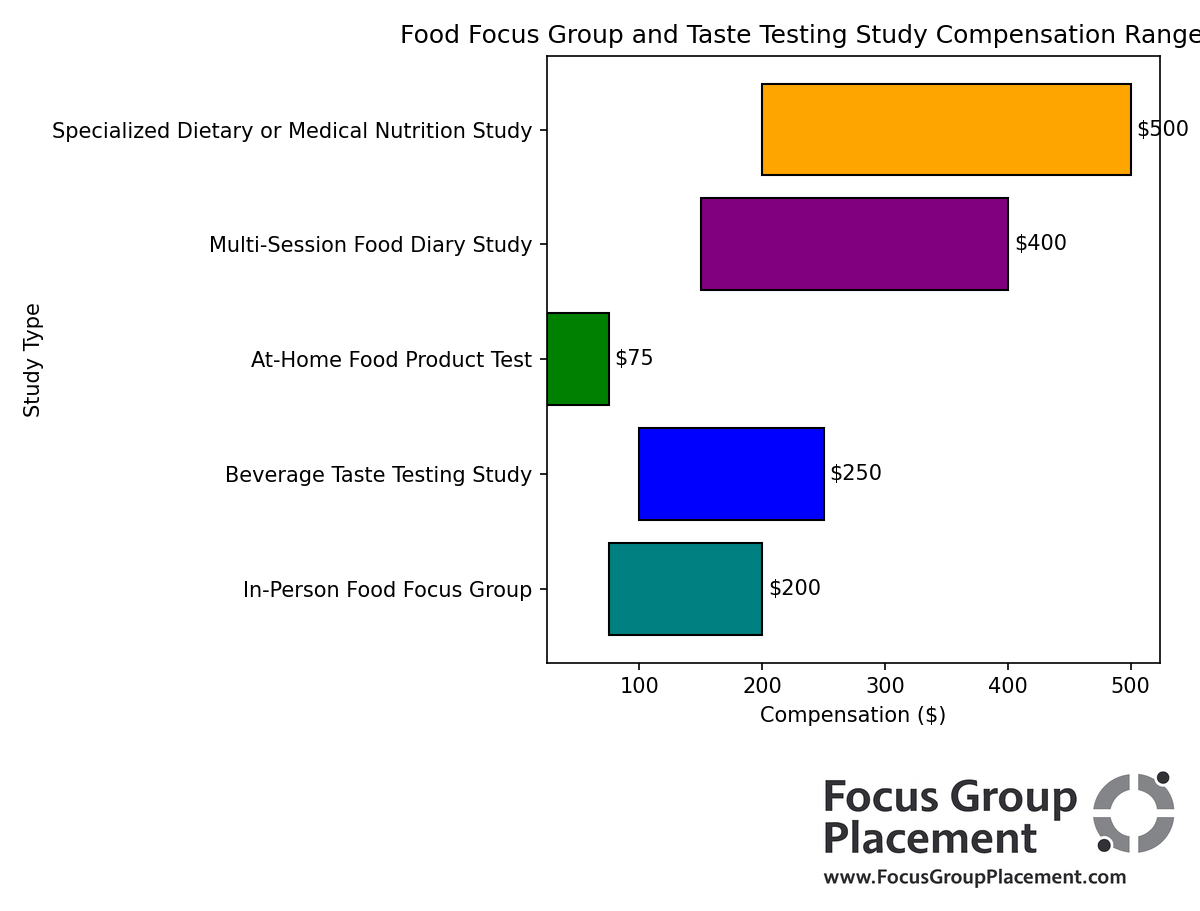
Compensation for food focus groups varies based on the type of study, its duration, and the specificity of the demographic being recruited. In-person food focus groups are among the best-compensated forms of market research participation, with most sessions paying between $75 and $200 for one to two hours of your time. When you break that down on an hourly basis, you’re looking at rates that comfortably exceed most part-time side hustles — and you’re getting a snack out of the deal.
Beverage focus groups — which cover everything from soft drinks and coffee to craft beer, wine, and functional wellness drinks — frequently sit at the higher end of the compensation spectrum. Because beverage companies operate with large marketing budgets and compete fiercely for consumer loyalty, they tend to invest more in research. Participants in beverage taste testing studies can typically expect compensation in the $100 to $250 range, with some specialized alcoholic beverage studies or premium product evaluations paying even more.
Multi-session studies are where the real earning potential emerges. Some food and beverage research firms run longitudinal studies that require participants to evaluate products over the course of several weeks, keeping a food diary, answering periodic surveys, and potentially attending two or three in-person sessions. These comprehensive engagements can pay $150 to $400 or more, depending on the time commitment involved. Highly specialized studies — such as those evaluating medical nutrition products, food for specific health conditions, or dietary supplements — can pay $200 to $500 because the recruiting criteria are extremely narrow and participants are harder to find.
Payment methods vary by firm but typically include prepaid Visa or Mastercard gift cards, checks, PayPal, Venmo, or digital payment apps. Most firms pay on the day of the session or within one to two weeks of completion. It’s worth noting that this income is taxable, and if you earn more than $600 from a single firm in a calendar year, you should expect to receive a 1099 form for tax purposes.
Finding Food Focus Groups Near You
The most important practical question for anyone interested in participating is: where do you actually find these opportunities? The good news is that food and beverage research is conducted in virtually every major metropolitan area in the United States, and a growing number of at-home studies are accessible to participants anywhere in the country.
Market research firms that run food focus groups are concentrated in cities with large consumer populations and significant food industry presence. If you’re in a city like Chicago, New York, Los Angeles, Dallas, or Houston, you’re in excellent territory — these metros have dozens of active market research facilities conducting food and beverage studies on a near-constant basis. You can find links to research firms in many of these cities through the Focus Group Placement city directory, which organizes opportunities by location to make your search more efficient. For example, if you’re based in the Midwest, you can explore Kansas City focus groups or browse Chicago market research firms to find firms actively recruiting in your area.
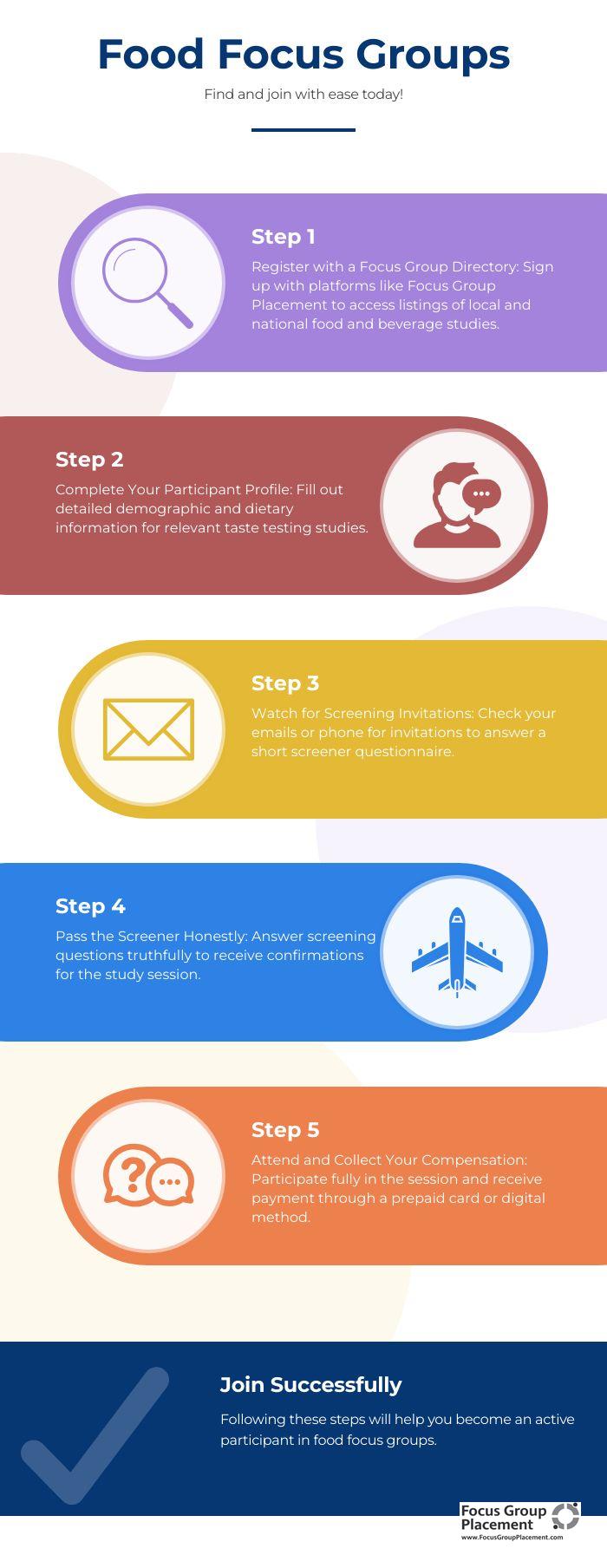
For those who prefer a centralized starting point, Focus Group Placement is a comprehensive directory of focus groups, market research firms, and research opportunities that includes food and beverage studies among its listings. The platform covers both in-person local opportunities and national at-home studies, making it a useful resource whether you live in a major city or a smaller market. You can browse the in-person focus group listings to see what’s currently available in your area, keeping in mind that food and beverage studies cycle through frequently as new products enter the development pipeline.
Beyond directories, you can register directly with individual market research firms that specialize in food and beverage research. Many of these firms maintain their own participant databases and reach out to qualified panelists when a relevant study comes up. The key is to register with multiple firms simultaneously, since any individual firm may only run a handful of studies per year that match your demographic profile. Casting a wide net is the most reliable strategy for securing consistent opportunities. You can explore a curated list of established firms through the Focus Group Placement market research firms directory.
Beverage Focus Groups: A Lucrative Niche Worth Knowing
Within the broader world of food and beverage market research, beverage focus groups deserve special attention because they tend to be exceptionally well-funded and frequently available. The global beverage industry — encompassing soft drinks, energy drinks, coffee, tea, bottled water, beer, wine, spirits, and the rapidly growing functional and wellness beverage category — spends billions annually on consumer research. A significant portion of that budget flows into qualitative research like focus groups and taste testing studies.
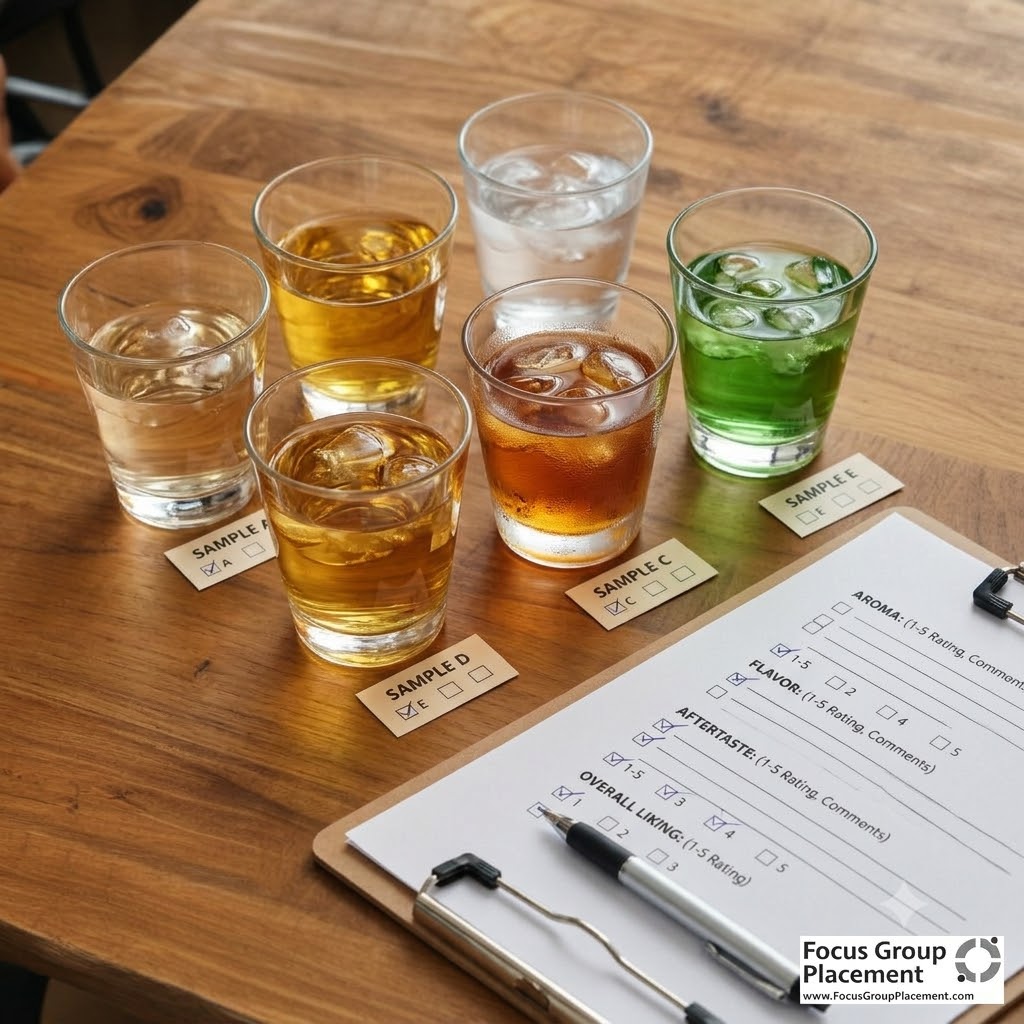
Beverage taste testing studies can take several forms. Blind taste tests are among the most common: you’re given two or more unlabeled beverages and asked to compare them on a range of sensory attributes, including aroma, sweetness, bitterness, mouthfeel, and aftertaste. These studies are particularly valuable for companies reformulating existing products — perhaps reducing sugar content or switching sweeteners — who need to know whether consumers will notice or object to the change. The Institute of Food Technologists notes that sensory evaluation panels, including consumer taste tests, are a cornerstone of food and beverage product development.
Concept testing is another common format for beverage research. In these sessions, you might taste a new product while also reviewing potential brand names, package designs, and marketing messages. The goal is to understand how the full brand experience — not just the liquid in the cup — resonates with target consumers. These sessions tend to be longer and more discussion-heavy than pure sensory evaluation panels, which is reflected in their typically higher compensation.
Alcoholic beverage focus groups — covering craft beer, wine, spirits, and the booming ready-to-drink cocktail category — are among the highest-paying in the beverage research world. Because legal age verification is required and the qualifying demographic is somewhat narrower, these studies often pay a premium. If you’re a legal drinking-age adult with genuine interest in and knowledge of alcohol, these opportunities are worth actively seeking out. Note that you don’t need to be an expert — in fact, researchers often specifically want the perspective of casual or occasional drinkers to understand mainstream appeal.
Tips for Qualifying for Taste Testing Studies
Successfully qualifying for food focus groups and taste testing studies is more of an art than people realize. Because researchers need very specific participant profiles, the screening process can be selective, and understanding how it works gives you a meaningful advantage.
The most important principle is simple honesty. Market research firms are skilled at identifying inconsistent answers, and providing false information to qualify for a study is considered fraud. Beyond the ethical issue, it’s also counterproductive — if you don’t genuinely fit the target profile, your feedback won’t be useful to the researcher, and you’re likely to be identified as a poor fit partway through the session. Legitimate firms have every right to withhold compensation if a participant was dishonest during screening.
That said, there are legitimate ways to maximize your qualifying rate. Registering with multiple research firms is the single most effective strategy, since the more firms that have your profile on file, the more screening invitations you’ll receive. Make sure your profile information is detailed and up to date — dietary restrictions, household composition, grocery shopping habits, brand usage, and dining frequency are all fields that researchers use to filter for relevant participants. Keeping this information current ensures you’re being considered for studies you actually qualify for.
Respond to screening invitations quickly. Market research firms typically recruit on tight timelines, and they fill spots on a first-come, first-qualified basis. If you wait two days to respond to a screening email, the study may already be fully enrolled. Setting up notifications for email from research firms in your database is a practical habit that will significantly increase your success rate.
It also helps to think broadly about your dietary habits and brand usage rather than narrowly. You may think of yourself as primarily a home cook, but if you also eat out occasionally, pick up grab-and-go lunches, and buy snacks at the grocery store, you fit the profile for a wide variety of food studies. Being thorough and honest in how you describe your habits opens more doors. For additional strategies on maximizing your research participation income, our article on legitimate product testing opportunities offers complementary advice that applies well to the food research space.
Are Food Focus Groups Legitimate?
Food focus groups conducted by established market research firms are entirely legitimate and represent a well-documented category of consumer income. Major brands — including household names in snack foods, beverages, restaurant dining, and packaged goods — routinely commission these studies as an essential part of their product development process. The market research industry in the United States alone generates tens of billions of dollars annually, and the participants who provide feedback are a critical part of that value chain. The Insights Association, the leading trade organization for the market research industry, provides ethical guidelines that reputable firms follow when recruiting and compensating participants.
That said, as with any income opportunity, scams do exist, so it is important to recognize the warning signs. Legitimate food focus groups will never require an upfront payment, ask you to purchase gift cards, or request sensitive financial information such as your banking password or full Social Security number. Before participating, verify the research company’s website, contact information, privacy policy, and reputation, and be cautious of offers promising unusually high pay for little or no effort.