
Product testing studies pay people to try products, apps, foods, packages, or digital experiences and share detailed feedback before those products reach a wider market. Some studies happen at home over several days. Others take place in a research facility, on a video call, or inside a mobile app. The basic idea is simple: a company needs honest reactions from the type of person who might actually buy or use the product.
That does not mean every applicant gets picked. Most product testing studies screen for a specific age range, household type, shopping habit, device, health need, or product category. If you qualify and complete the study, you may receive cash, a gift card, points, or the chance to keep the product. This guide explains how home-use tests, app tests, taste tests, and in-person panels usually work so you can spot real opportunities and avoid offers that waste your time.
What are product testing studies?
Product testing studies are market research projects where participants use or evaluate a product and report what happened. A researcher may ask whether the product was easy to use, whether the instructions made sense, how it compared with what you normally buy, and what you would change before launch.
These studies are different from a standard discussion-only focus group. In a focus group, you may talk about ideas, ads, brands, or buying habits. In a product test, the product itself is part of the assignment. You might taste a snack, use a laundry detergent for a week, test a shopping app checkout flow, or compare two package designs. Many studies include both parts: product use first, then a survey, interview, or group discussion afterward.
Companies use this feedback to catch problems before a launch. A label may be confusing. A scent may be too strong. An app button may be hard to find. A snack may taste good in a lab but not when people eat it at home with their usual meals. Those details matter, and they are hard to learn without real participants.
If you want to browse current opportunities, Focus Group Placement lists paid product testing studies along with other paid research studies, online surveys, focus groups, and clinical research listings.
Home-use tests: how at-home product testing works
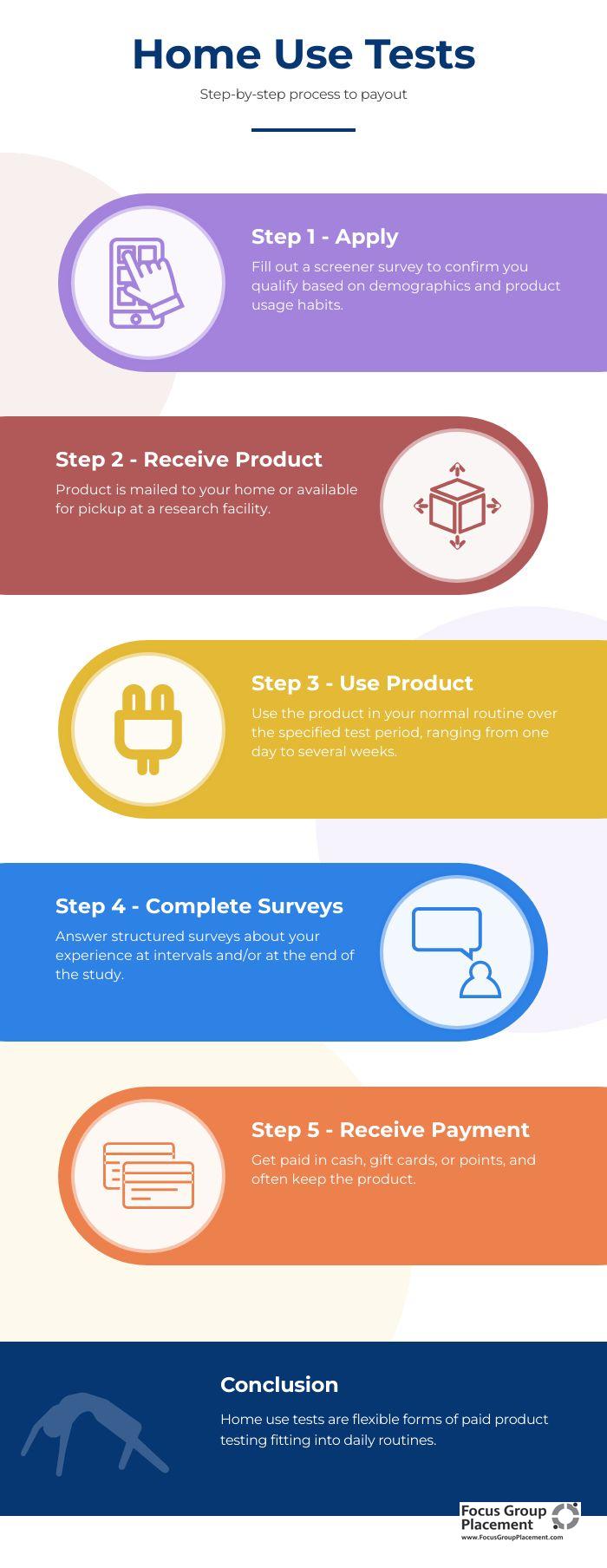
Home-use tests, often called HUTs, are one of the most common types of product testing studies. A research company sends you a product or asks you to pick it up from a local facility. You use it at home for a set period, then answer questions about the experience.
The timeline depends on the product. A beverage test might take one evening. A skincare test may run for two to four weeks because the researcher needs to know how your skin responds over time. A cleaning product test may ask you to use the product several times and compare it with what you normally buy.
During a home-use test, you may be asked to:
- Follow usage instructions exactly
- Avoid using competing products during the test period
- Keep a diary or take short notes after each use
- Complete one or more surveys
- Upload photos or packaging feedback
- Join a follow-up interview by phone or video
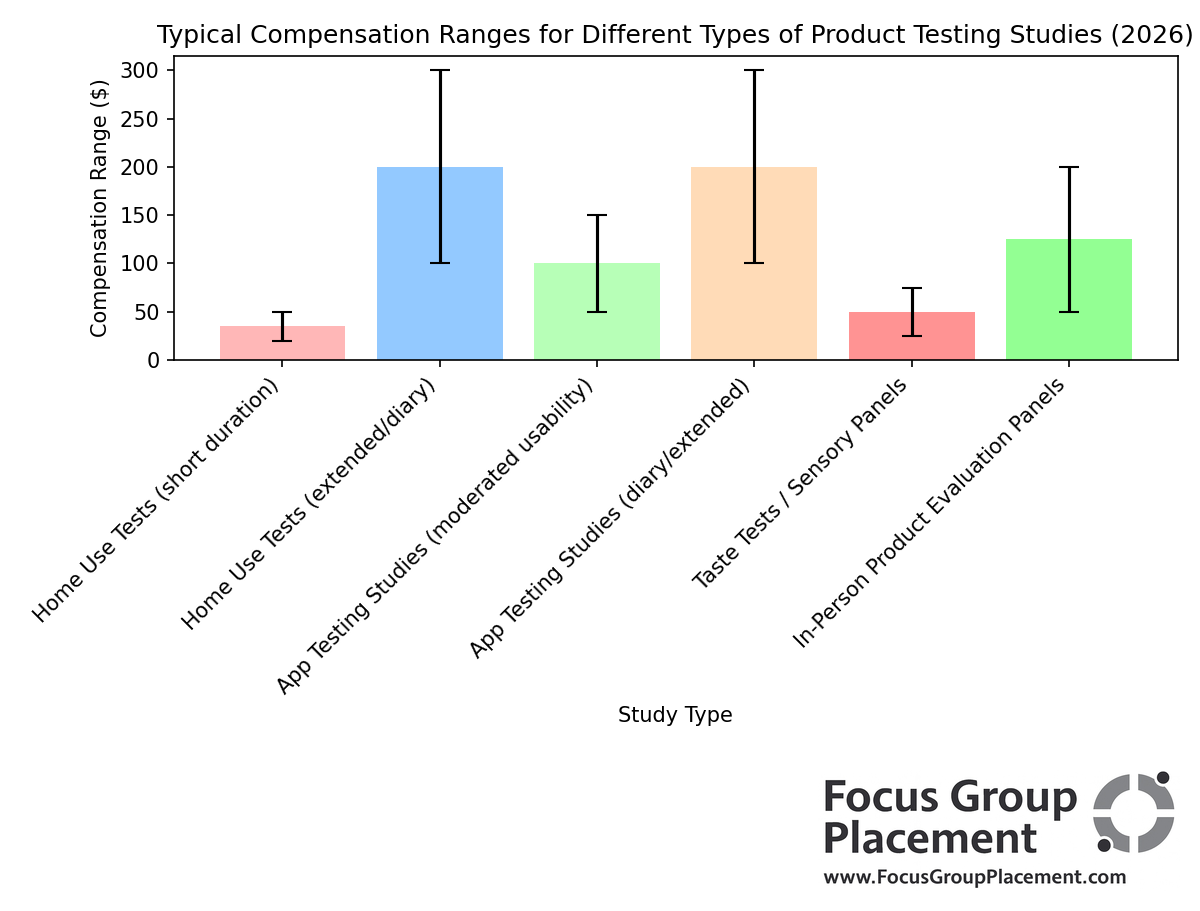
Pay for home-use tests varies. Short tests may pay around $20 to $50. Longer diary studies can pay $100 to $300 or more, especially when they require repeated check-ins. Some studies also let participants keep the tested product. Read the rules carefully, though. Payment is usually tied to completing every required step, not simply receiving the product.
App testing studies and digital product tests
App testing studies focus on websites, mobile apps, software tools, prototypes, or digital services. The company wants to know how real users move through the product. Can they create an account? Find the right button? Understand the pricing page? Finish checkout without getting stuck?
Some app testing studies are moderated. A researcher watches through screen share while you complete tasks and talk through what you are thinking. These sessions often last 30 to 90 minutes. Other tests are unmoderated. You receive instructions, record your screen and voice, and complete the tasks on your own schedule. Longer app studies may ask you to use the app for several days and answer diary questions along the way.
You do not always need to be technical. In fact, many researchers want average users because those people reveal where a product is confusing. You may qualify based on your phone type, operating system, job, hobbies, shopping habits, financial habits, or experience with a certain category of app.
Typical app testing pay can range from about $25 for a short unmoderated test to $50 to $150 for a live usability session. Multi-day app diary studies can pay more. As with other product testing opportunities, applying is not the same as qualifying. The screener decides whether your profile matches the study.
Taste tests and sensory product testing studies
Food and beverage companies run a steady stream of taste tests. You might compare two versions of a snack, rate a new drink flavor, test a sauce, or evaluate texture, aroma, packaging, and portion size. Some studies happen in sensory labs with individual booths so participants do not influence each other. Others happen at home with mailed samples and a survey.
Taste tests are usually shorter than home-use tests. Many take 30 to 90 minutes and pay around $25 to $75. Some specialized food studies pay more, especially if they require multiple visits or a very specific consumer profile.
Screeners for taste tests often ask about food allergies, dietary restrictions, shopping habits, and how often you eat or drink the product category. Be honest. A study involving dairy, nuts, gluten, caffeine, or other ingredients is not worth risking your health. Legitimate recruiters should disclose enough information for you to decide whether the study is safe and appropriate.
Local availability matters for facility-based taste tests. Larger metro areas tend to have more research labs and consumer product companies. You can browse paid studies by city or look through the market research firms directory to find companies that recruit in your area.
In-person product testing panels
In-person product testing panels take place at a research facility, corporate lab, university lab, or temporary testing location. Researchers use this format when they need to observe people directly, control the setting, use special equipment, or test products that cannot easily be shipped.
Examples include testing a vehicle dashboard, trying a new smart home device, comparing packaging prototypes, reviewing a medical device interface, or using a personal care product under supervision. A researcher may ask follow-up questions while you work with the product, or you may complete a survey after the session.
Because in-person studies require travel and scheduled attendance, they often pay more than short online tests. Many fall in the $50 to $200 range. Specialized studies can exceed that, but higher pay usually comes with stricter screening requirements or a longer time commitment.
Before you agree to attend, confirm the location, expected length, payment method, parking or transit instructions, and whether you need to bring ID. A real research company should provide clear instructions and should not ask you to pay a fee to participate.
How to qualify for paid product testing studies
Most paid product testing studies begin with a screener. The screener helps the research company choose people who match the client’s target audience. That can feel frustrating, especially when you answer several questions and then get screened out, but it is part of how market research works.
Common qualification factors include:
- Age, location, household size, or income range
- Brands or products you currently use
- How often you shop in a category
- Dietary restrictions, allergies, or health considerations
- Device type for app testing studies
- Whether you work in a restricted industry such as advertising or market research
- Availability for the required dates and follow-up steps
The best strategy is to be accurate, not to guess what the recruiter wants to hear. Researchers often build studies around a precise mix of participants. If your answers do not match your real habits, you may be removed later, and you may not be paid.
How to find legitimate product testing opportunities
There are real product testing studies, but there are also low-quality offers and scams that use “free product testing” language to collect personal information. A legitimate paid product testing opportunity should come from a recognizable research company, brand, university, product lab, or trusted listing source.
Watch for these signs of a safer opportunity:
- No fee to apply or participate
- Clear study length, topic, and payment details
- A real company name and contact information
- A privacy policy or participant agreement
- Payment after successful completion, not vague prize language
- No request for bank login details, crypto payments, or unnecessary financial information
The FTC’s guidance on fake check scams is worth reading if a recruiter sends a check and asks you to buy products, return money, or forward funds. Real product testing studies do not need you to move money for a recruiter.
To build a steadier pipeline, register with several reputable panels, check local research firms, and browse current listings regularly. Focus Group Placement can help you start with product testing opportunities, then expand into paid studies, local studies by city, and the FAQ if you are new to paid research.

Product testing studies vs. clinical trials
Product testing studies and clinical trials both involve participants, but they are not the same thing. Consumer product testing usually focuses on opinions, usability, sensory experience, packaging, or routine product performance. Clinical trials test medical treatments, drugs, devices, or health interventions under stricter regulatory and medical oversight.
Some personal care or cosmetic studies sit between those categories. A sunscreen, acne product, sensitive-skin product, or anti-aging claim may involve dermatologist review, measurement tools, or stricter eligibility rules. That still does not automatically make it a clinical trial, but it does mean you should read the consent form carefully and ask questions before participating.
If a study involves anything you will ingest, apply to your skin, use near your eyes, or use for a health-related purpose, pay attention to ingredients, risks, and instructions. You should know what you are agreeing to before you begin.
Frequently asked questions about product testing studies
How much do product testing studies pay?
Short online or app tests may pay around $25 to $75. Home-use tests often pay $20 to $100, with longer diary studies sometimes reaching $100 to $300 or more. In-person panels and specialized studies can pay higher rates. Exact pay depends on the study length, difficulty, location, and participant requirements.
Do I get to keep the product?
Sometimes. Some home-use tests let you keep the product after the study. Others require you to return unused portions, packaging, devices, or prototypes. The recruiter should explain the rules before you start.
Are product testing studies legitimate?
Many are legitimate, especially when they come from established market research firms, universities, product labs, or known brands. Be cautious with offers that ask for money upfront, promise unrealistic earnings, or ask you to cash checks and send money elsewhere.
Can I do product testing studies from home?
Yes. Home-use tests, app testing studies, remote usability tests, and mailed product surveys can often be done from home. Some product categories still require in-person attendance because of safety, equipment, confidentiality, or shipping limitations.
Why do I keep getting screened out?
Screen-outs are normal. A study may need people who buy a certain brand, use a specific phone, live in a certain city, or fit a narrow household profile. Being screened out does not mean you did anything wrong. It usually means the study already has enough people like you or needs a different profile.
Ready to look for paid product testing studies?
Product testing can be a practical way to earn extra money while sharing feedback on products you might use anyway. The best opportunities are clear about the assignment, honest about the pay, and realistic about who qualifies.
Start by browsing current paid product testing studies on Focus Group Placement. If nothing fits today, check back often and consider related categories such as online surveys, focus groups, clinical trials, and local research studies. New listings open and close quickly, and the right match often comes down to timing.
For home-use and app tests, read the instructions before accepting: confirm shipping expectations, device compatibility, app permissions, photo or diary requirements, and when the incentive is paid. Be cautious with any opportunity that asks for an upfront fee or sensitive account credentials.
Next step
Safety and privacy note: Product tests and app tests may involve shipping details, device requirements, app permissions, photos, diaries, or follow-up interviews. Apply only when the study terms are clear, avoid upfront fees, and do not share sensitive credentials unrelated to research screening.
Browse product testing opportunities.