Quick answer: Paid focus groups recruit people who match a study’s audience, ask them for moderated feedback online or in person, and compensate qualified participants for their time. This guide explains the steps, pay ranges, screening, and how to find current opportunities safely.
How Paid Focus Groups Work: A Beginner’s Guide
How Paid Focus Groups Work is simple once you know the sequence: you find a study, answer screening questions, wait for the recruiter to confirm whether you fit, attend the session if selected, and get paid after you complete it. The confusing part is that applying is not the same thing as qualifying. A lot of beginners miss that distinction, then wonder why they filled out three screeners and never received an invite.
Paid focus groups are a normal part of market research. Companies, agencies, universities, healthcare organizations, and product teams use them to hear how real people react to products, ads, apps, services, packaging, or everyday experiences. In exchange for your time, the research company offers an incentive, usually cash, a prepaid card, a digital gift card, or another payment method listed in the study invitation.
This guide explains how paid focus groups work from application to payment, including what happens in a session, why screeners reject so many people, what pay ranges are realistic, and how to avoid wasting time on studies that do not fit you.

How Paid Focus Groups Work step by step
Most studies follow the same basic path. The details change from one research company to another, but the flow is usually predictable:
- You find a study that matches your location, background, interests, or experience.
- You complete a screener survey.
- The recruiter reviews your answers.
- If you appear to fit, the recruiter confirms the session details by phone, text, or email.
- You attend the focus group online or in person.
- You receive the listed incentive after the company verifies your participation.
Some studies move fast. Others take several days because the recruiter needs a specific mix of participants. If you do not hear back, it usually means you were not selected. It does not necessarily mean you answered incorrectly or did anything wrong.
[INSERT INFOGRAPHIC] Headline: “How Paid Focus Groups Work: From Application to Payment.” A six-step process infographic showing: Step 1 – Find a study and apply; Step 2 – Complete the screener; Step 3 – Wait for recruiter review; Step 4 – Confirm the session details; Step 5 – Attend the group online or in person; Step 6 – Receive the listed incentive. Include a small note: “You only get paid if you are selected and complete the session.” Template Name: Flow – Light ALT TEXT: How Paid Focus Groups Work from application to payment
What is a paid focus group?
A paid focus group is a moderated research session where people share opinions about a topic, product, service, ad, app, shopping habit, health experience, or consumer decision. A moderator asks questions, keeps the discussion moving, and may ask follow-up questions when someone gives an interesting answer.
Most focus groups are run by market research firms on behalf of another organization. That organization may want feedback from a very specific audience. For example, a grocery app study may need parents who shop for their household at least twice a month. A business software study may need managers who help choose workplace tools. A healthcare study may need patients or caregivers with direct experience of a condition.
That is why screening matters. A focus group is not looking for everyone. It is looking for the right people for that research question.
Step 1: Find a study that fits you
You can browse current opportunities through a research directory, a market research firm, or a participant panel. On FocusGroupPlacement, a good starting point is the current paid studies page. If you prefer local sessions, you can also browse paid focus groups by city.
Before applying, read the listing closely. Look for:
- Location or remote availability
- Age, household, job, or product-use requirements
- Session length
- Incentive amount
- Payment method
- Webcam, phone, or in-person attendance requirements
If the listing clearly does not fit you, skip it. Applying to everything is tempting, but it can hurt more than it helps. Recruiters are trying to fill specific slots, and inaccurate answers can get you removed from a panel.
Step 2: Complete the screener
The screener is the short survey that checks whether you match the study requirements. It may ask about your age range, location, household, shopping habits, job role, technology use, health experience, travel habits, or product preferences.
Some questions will feel oddly specific. That is normal. A cereal study may only want parents with young children. A banking study may only want people who opened a checking account in the last year. A product testing study may only want people who own a certain type of device.
Answer honestly. Do not try to guess what the recruiter wants. Many screeners include consistency checks, and recruiters may verify your answers during a follow-up call. If your answers do not match, you may lose the invite.
Step 3: Wait for review and confirmation
Completing a screener means you applied. It does not mean you were accepted.
After you submit your answers, the recruiter reviews applicants and builds a group that matches the research plan. They may need a balance of ages, locations, income ranges, product users, non-users, parents, professionals, or other categories. Sometimes you qualify on paper but still are not selected because that slot is already full.
If the recruiter wants to move forward, you may receive a phone call, text, or email. They may ask a few more questions, confirm your availability, and remind you of requirements such as joining from a quiet room, using a laptop instead of a phone, or bringing ID to an in-person facility.
Step 4: Attend the session
Paid focus groups can happen in several formats. Understanding these formats is a big part of understanding how paid focus groups work in practice.
In-person focus groups
In-person groups are usually held at a research facility, office, hotel meeting room, or rented event space. You arrive at the scheduled time, check in, and join a discussion with other participants. Some facilities have observation rooms or one-way mirrors so the research team can watch without interrupting the conversation.
If you want this type of opportunity, start with in-person paid focus groups and city-specific listings.
Online focus groups
Online groups usually happen over Zoom or a similar video platform. You may need a working webcam, microphone, stable internet, and a quiet place to talk. The moderator will usually ask everyone to keep cameras on and participate out loud.
Online sessions can be easier to fit around work or family schedules, but they still require your full attention. Joining while driving, shopping, caring for kids, or multitasking can get you removed from the session.

One-on-one interviews
Some paid research studies are not group discussions. They are one-on-one interviews with a moderator. These are common for business, software, healthcare, and specialized consumer topics. The format is more personal, and the moderator may ask detailed follow-up questions about your experience.
Diary studies and longer projects
A diary study may ask you to track behavior over several days, upload photos, answer daily prompts, test a product at home, or record short videos. These studies take more effort, but the incentive may be higher because the commitment is longer.
What happens during the discussion?
The moderator is not looking for perfect answers. They want honest reactions. You might be asked to talk about:
- How you choose between products or services
- What you like or dislike about a concept
- How you use an app, website, device, or service
- What an ad, package, name, or message makes you think
- What problems you run into as a customer, patient, parent, traveler, or professional
Good participants speak clearly, stay on topic, and give specific examples. You do not need to be overly positive. Negative feedback can be useful if it is honest and specific. “I would not use this because the signup form asks for too much information” is more helpful than “I do not like it.”
How much do paid focus groups pay?
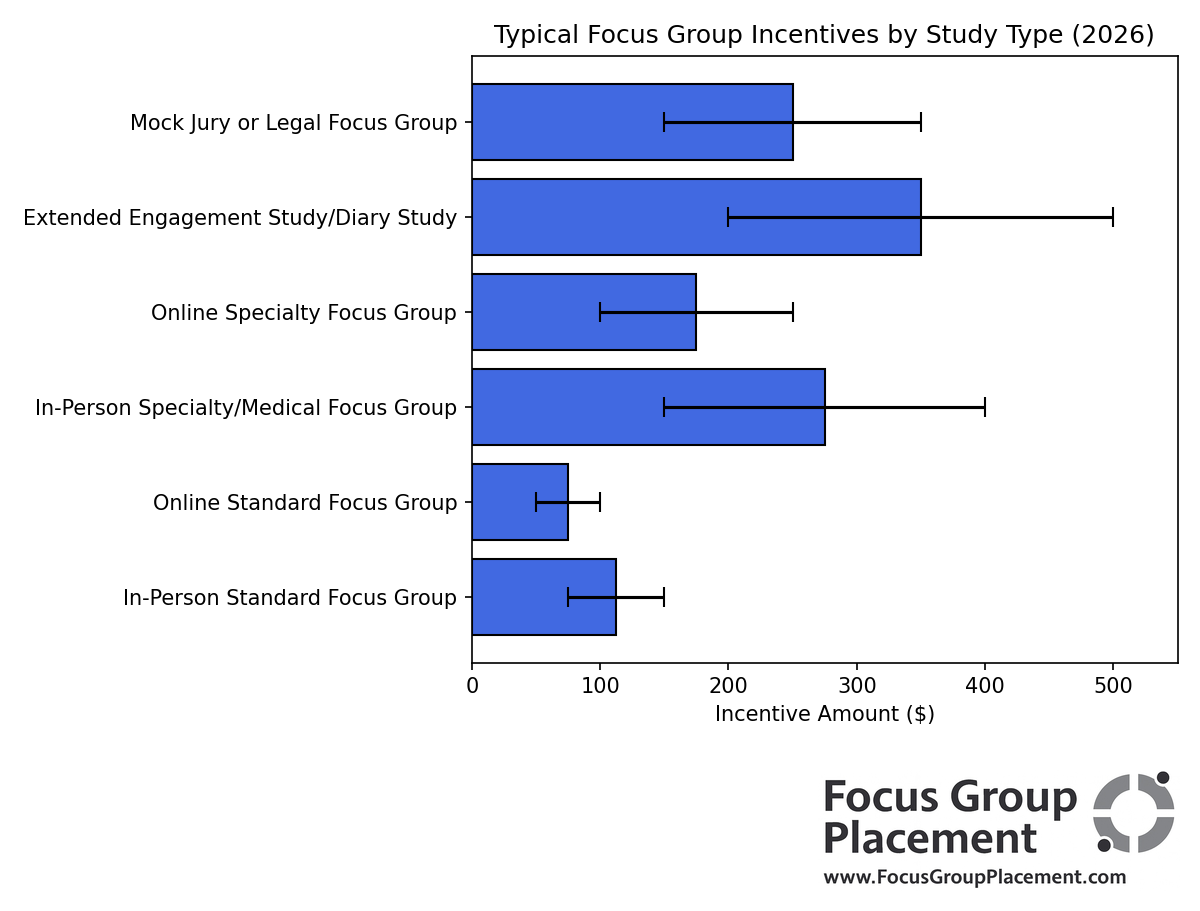
Incentives vary by format, length, and audience. A short online consumer session might pay around $50 to $100. A standard in-person group may pay around $75 to $150. Specialized studies, professional interviews, medical research discussions, mock juries, and longer diary studies can pay more.
Payment is never guaranteed just because you apply. You normally receive the incentive only if you are selected, show up on time, meet the requirements, and complete the session.
When and how do you get paid?
Payment timing depends on the research company. Some in-person facilities pay at the end of the session. Online studies often pay by digital gift card or prepaid card after the session is verified. That can take a few days, and some companies list a longer payment window in the invitation.
Before you agree to a study, check the listed incentive, payment method, and payment timing. If that information is missing, ask the recruiter before confirming.
Are paid focus groups safe?
Legitimate paid focus groups do not ask you to pay a fee to participate. Be careful with any listing that asks for upfront payment, pressures you to act immediately, promises unrealistic income, or requests sensitive financial information that has nothing to do with the study.
For general consumer scam guidance, USA.gov explains common warning signs and reporting options, including pressure tactics, requests for unusual payment methods, and promises that sound too good to be true.
Basic safety rules:
- Do not pay to join a focus group.
- Do not share banking passwords, full Social Security numbers, or unrelated sensitive documents.
- Check that the recruiter, company, and study details look real.
- Read the consent form before joining.
- Use common sense with any request that feels unrelated to research.
If you are new, the FAQ is a useful place to review common questions before applying.
Why you may not qualify
Beginners often assume rejection means they answered incorrectly. Usually, it just means the study needed a different profile.
You might not qualify because:
- The study needs a specific age range, city, job role, or household type.
- The recruiter already filled your demographic slot.
- You use the wrong product or do not use it often enough.
- You recently participated in a similar study.
- Your schedule does not match the available session time.
- The client wants a mix of current customers and non-customers.
This is why focus groups should be treated as occasional extra income, not predictable weekly pay. Apply when a study genuinely fits you, then move on if you are not selected.
How to improve your chances
You cannot force yourself into a study, but you can make the process easier. Keep your profile information accurate. Apply quickly when a study truly matches you. Answer screeners honestly and consistently. Respond to recruiter calls, texts, or emails promptly. Show up on time if selected, and participate thoughtfully during the session.
Recruiters remember reliable participants. If you confirm and then no-show, arrive late, or give careless answers, you may get fewer invitations in the future.
Final take on how paid focus groups work
How Paid Focus Groups Work comes down to a practical sequence: find a relevant study, complete the screener, wait for confirmation, attend if selected, and receive the listed incentive after you finish. The main thing to remember is that applying is not qualifying.
If you are interested, start with studies that actually fit your location, background, and availability. You will save time, give recruiters better information, and have a better chance of being selected for the right opportunities.
Ready to look for current opportunities? Browse current paid focus groups and research studies on FocusGroupPlacement.