
Paid focus groups are a normal part of market research. Companies, agencies, and research firms use them to hear how real people react to products, services, ads, apps, healthcare experiences, financial tools, entertainment, food, and other topics before bigger decisions are made.
The part that confuses most beginners is the process. You usually do not click a listing and automatically get paid. You apply, answer screening questions, wait to see whether you qualify, attend the session if selected, and then receive the listed incentive after completing the study.
This guide explains how paid focus groups work from start to finish, including screening, session formats, confidentiality, incentives, and what to expect before you apply. If you are new to paid research, the main thing to know is that how paid focus groups work is more structured than a quick survey: recruiters need the right people for the right study, and payment comes after selection and completion.
What a paid focus group is
A paid focus group is a research session where a small number of people discuss a topic with a moderator. The moderator asks questions, keeps the conversation moving, and makes sure participants have a chance to speak.
Most focus groups have about 4 to 12 participants. Some are larger. Some are one-on-one interviews instead of group discussions. The format depends on what the researcher is trying to learn.
The incentive is payment for your time and participation. It is not guaranteed just because you apply. You normally receive it only if you are selected, attend or complete the session, and follow the study instructions.
How paid focus groups work, step by step
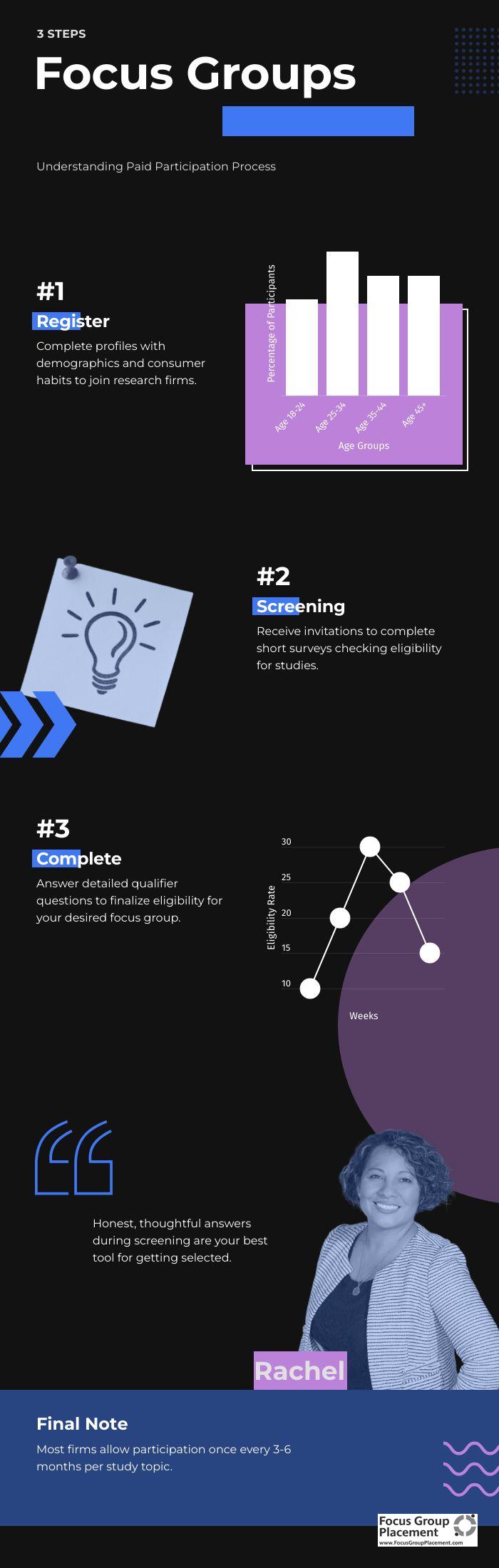
Most paid focus groups follow the same basic path. Once you see how paid focus groups work in order, the process is easier to judge before you spend time applying.
- You find a study. You can browse current paid research studies, search by category, or look for local opportunities near you.
- You answer screening questions. The screener checks whether your background, habits, location, or experience match what the researcher needs.
- The recruiter reviews your answers. Many people apply, but only some match the exact profile for that study.
- You receive an invitation if selected. The invitation should explain the date, time, format, incentive, payment method, and any prep work.
- You attend the session. This may be in person, by phone, by video call, or through a multi-day online activity.
- You get paid after completion. Payment timing varies. Some in-person sessions pay immediately; online studies often take a few business days.
Screeners are where beginners often get tripped up. It is tempting to guess what answer will get you selected, but that can backfire. Researchers need specific participants. If your answers do not line up later, you may be removed from the study or skipped for future opportunities.
Why you may not qualify
Not qualifying does not mean you did anything wrong. A study might need parents with children in a certain age range, people who recently bought a specific product, business owners in a particular industry, or residents of a certain city.
Recruiters may also need a mix of participants. If a group already has enough people in your age range, job type, or product-use category, you may be screened out even if your answers are accurate.
The best approach is simple: answer honestly, keep your profile current, and apply to studies that genuinely match your background.
What happens during a session
In an in-person focus group, you usually arrive at a research facility, check in, review a consent form, and wait for the moderator to begin. You may be asked to show ID. Some facilities offer light refreshments, though that is not the point of attending.
Online focus groups are similar, except you join by video call. You may need a working webcam, microphone, quiet room, and reliable internet connection. The recruiter should tell you those requirements before the session.
The moderator will explain the topic and ground rules. You might react to a product idea, compare ads, discuss shopping habits, review packaging, talk about an app, or describe your experience with a service. There are usually no right or wrong answers. Researchers want honest reactions, not polished speeches.
Some sessions are recorded. Some have client observers watching behind a one-way mirror or through a private online viewing link. That can sound strange the first time, but it is standard in market research and should be disclosed in the consent materials.
Common focus group formats
Paid research can take several forms:
- In-person focus groups: Small group sessions at a research facility. These often pay well because they require travel and a firm time commitment.
- Online focus groups: Group discussions held by webcam. These are convenient, but they can be competitive because people can join from many locations.
- One-on-one interviews: A moderator interviews one participant by phone, video, or in person.
- Diary studies: You complete short tasks, videos, or written responses over several days.
- Product tests: You try a product, app, or service and provide feedback afterward.
If you want local sessions, start with in-person focus group studies. If location matters, the city directory can help you find opportunities near major research markets.
How incentives work
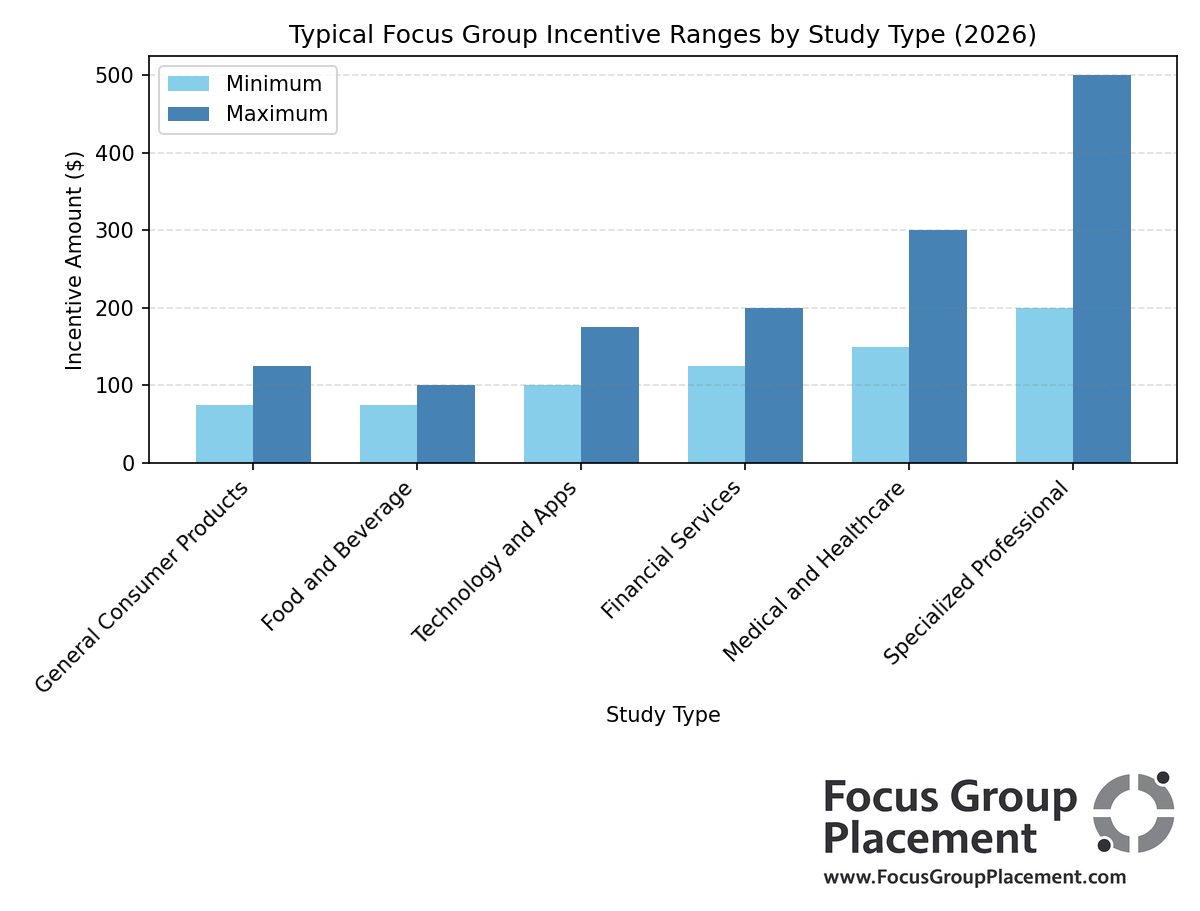
Focus group incentives vary by topic, format, length, and how hard it is to find qualified participants. A general consumer interview may pay less than a study for physicians, IT decision makers, caregivers, or people with a specific health condition.
Typical consumer studies often pay somewhere around $50 to $200. Short phone interviews may pay less. Longer or more specialized studies can pay more. Treat every amount as study-specific, not as guaranteed income.
Payment methods also vary. In-person sessions may pay by cash, check, or prepaid card at the end of the session. Online studies may pay by PayPal, virtual Visa or Mastercard, mailed check, gift card, or another digital reward. Read the listing and confirmation email carefully so you know both the amount and the payment timing.
Privacy and confidentiality
Legitimate research studies should explain what information is being collected, how the session may be recorded, and how your responses may be used. You may be asked not to share product concepts, screenshots, ads, or discussion details outside the session.
Screeners often ask demographic questions, shopping habits, work background, health experiences, or product usage. That can be normal. Still, be cautious with sensitive requests. You should not have to pay a fee, buy gift cards, share bank logins, provide one-time passcodes, or move a conversation to a suspicious off-platform channel to join a legitimate study.
If you have questions about eligibility, privacy, or how listings work, review the FocusGroupPlacement FAQ before applying. For broader industry context, the Insights Association publishes standards and resources for market research and participant privacy.
What beginners should expect when learning how paid focus groups work

Paid focus groups can be a useful way to earn extra money, but they are not steady work. You may qualify for one study quickly, then go weeks without a match. That is normal, and it is part of how paid focus groups work for most participants.
A few practical expectations help:
- Applying does not guarantee selection.
- Honest screener answers matter more than trying to guess what recruiters want.
- Higher-paying studies are usually more selective.
- In-person studies may pay more, but travel time counts.
- Online studies are convenient, but the applicant pool is larger.
- You should confirm the incentive, payment method, date, time, and session requirements before committing.
If you are selected, treat the session like a real appointment. Show up on time, follow the instructions, participate respectfully, and give clear, honest feedback.
Safety checklist before you apply
- Do not pay to participate. Legitimate paid research pays participants, not the other way around.
- Read the study details. Look for the topic, format, time commitment, incentive, payment method, and eligibility requirements.
- Protect sensitive information. Be careful with Social Security numbers, bank details, passwords, one-time codes, or requests to buy anything.
- Check the time commitment. A study with pre-work or follow-up tasks should explain those requirements upfront.
- Be realistic about payment. You get paid after selection and completion, not for every screener you answer.
Ready to browse current paid focus groups?
Once you understand how paid focus groups work, the next step is to compare real listings and apply only to studies that fit your location, schedule, and background.
Browse current paid focus groups
FocusGroupPlacement lists current paid research opportunities, including paid research studies, in-person focus groups, and studies organized by city. Review each listing’s eligibility, format, incentive, and timing before applying.